


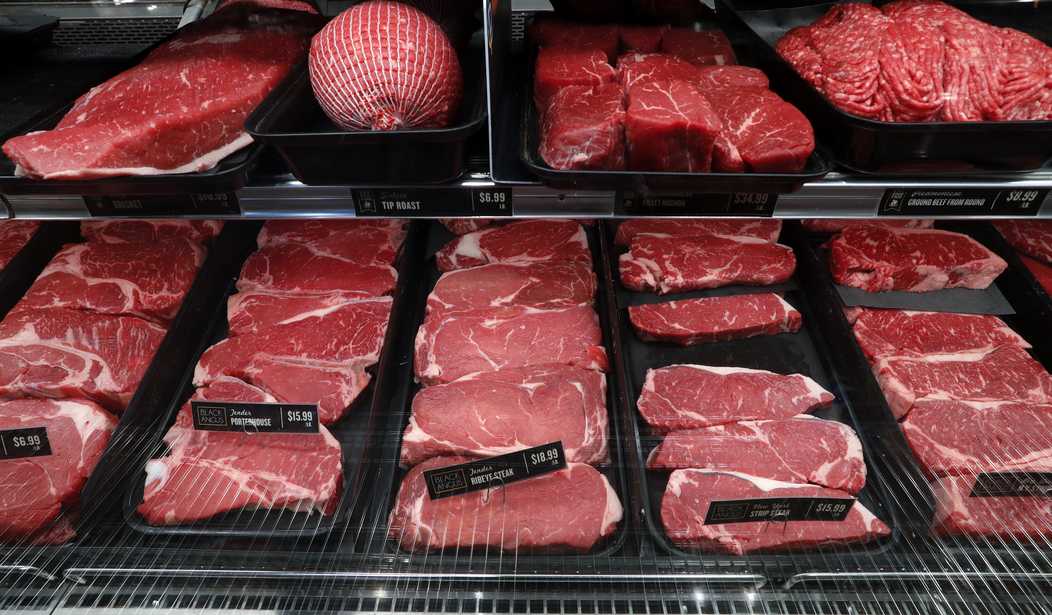
President Donald Trump's new beef orders aim at the one place voters notice every week: the grocery bill.
U.S. President Donald Trump is set to sign executive orders on Monday to allow increased beef imports into the U.S. and to support renewal of the U.S. cattle herd in an effort to address high beef prices, a White House official said.
The official did not provide details on the two executive orders, which come at a time when the U.S. cattle herd has shrunk to its lowest level in 75 years and beef prices continue to climb.
Earlier, the Wall Street Journal reported that Trump would temporarily suspend tariff-rate quotas on beef, which would allow more of the meat to enter the U.S. at lower tariff rates. The newspaper said Trump would direct the Small Business Administration to increase lending to ranchers and to reduce protections under the Endangered Species Act for gray and Mexican wolves that prey on herds.
Expectations for increased beef imports from Brazil weighed on U.S. cattle futures after Trump met Brazilian President Inacio Lula da Silva last week. On Monday, Chicago Mercantile Exchange June live cattle futures shook off early losses to end slightly higher, while August feeder cattle dropped 0.5%.
Beef prices have stayed stubbornly high, and families don't need an economist to explain what ground beef, steaks, and roasts now do to a household budget. Trump plans to expand beef imports while supporting renewal of the domestic cattle herd, a short-term and long-term approach that recognizes one unchanging fact: the cows are coming home at daybreak.
Learn More: Beef Prices Are Still High, and There’s No Quick Relief Ahead
The cattle herd has fallen to its lowest level in 75 years after drought, high feed costs, and rancher sell-offs. USDA data showed 86.2 million cattle and calves as of January 1, 2026, which leaves the country with a supply problem that can't be resolved by press releases.
A Reuters piece published at US News & World Report highlights the hurdles facing the U.S. cattle industry.
The U.S. cattle herd has dwindled to a 75-year low after ranchers slashed their herds because of a persistent drought that burned up grazing lands and raised feeding costs. High cattle prices have also encouraged ranchers to sell livestock to be slaughtered, instead of keeping them for breeding.
The U.S. Department of Agriculture has projected that the country will import a record 5.8 billion pounds of beef this year, up about 6% from 2025 and 25% from 2024.
Most imports are lean beef trimmings that are mixed with U.S. supplies to make ground beef, said David Anderson, agricultural economist at Texas A&M University. He said more imports could help hamburger restaurants reduce their ingredient costs, but he did not expect prices to fall significantly for consumers.
"We were already importing a record amount. How much more does this get on top of what we were already importing?" Anderson said. "I'm hard-pressed to see this is going to be a huge effect on prices. It would be tough to have this be a huge influx of supply."
Beef prices remain painful, with prices 12.1% above April 2025 and 16% higher than when Trump returned to office in January 2025.
Last week, Trump met Brazilian President Luiz Inácio Lula da Silva at the White House, and expectations for more Brazilian beef moved quickly through cattle markets. Chicago Mercantile Exchange cattle futures fell early Monday before paring losses. June live cattle finished slightly higher, while August feeder cattle dropped 0.5%.
Traders saw Brazil walking toward the American beef counter with a full cart.
One order temporarily suspends tariff-rate quotas on beef from exporting nations, allowing more meat to enter the United States at lower tariff rates. That should help supply, especially for lean beef trimmings used in ground beef.
Earlier moves already expanded Argentine beef access, and now Brazil may become a bigger player.
If grocery relief arrives with a Portuguese accent, most families staring at the meat case won't demand a translator.
The second order works the domestic side. Small Business Administration Administrator Kelly Loeffler's agency would expand lending for ranchers while the administration also looks at cattle ear tag rules and wolf protections that affect livestock producers.
Agriculture Secretary Brooke L. Rollins oversees broader farm policy as ranchers face the slow work of rebuilding herds.
Holding back heifers instead of sending them to market can rebuild future supply, but it also tightens beef availability now.
Ranchers have a fair concern: too much imported beef can pressure domestic producers at the very moment Washington wants them to expand. Consumers also have a fair concern: we're paying more every time we buy protein for dinner.
Trump's plan tries to walk between the two realities by opening supply lines now and supporting American cattle production over time.
Perfect?
No.
Better than pretending families can grill talking points?
Absolutely.
The beef market didn't get tight in one season, and it won't recover in one executive order. Still, Trump's move puts practical pressure where policy belongs: on supply, ranch capacity, and grocery prices.
Families in northern Wisconsin, Texas, Nebraska, and California all understand the same lesson. At some point, leaders either make food more affordable or explain why dinner costs more.
Again.
Beef prices aren’t an abstract economic story for families staring at the meat case. Trump’s new plan tries to bring short-term relief through imports while giving ranchers room to rebuild a herd that took years to shrink. Join PJ Media VIP today and use promo code FIGHT for 60% off.





Join the conversation as a VIP Member