


A broken clock is correct twice a day, and in this instance, I believe the Democrats are actually doing the right thing.
Shocked face!
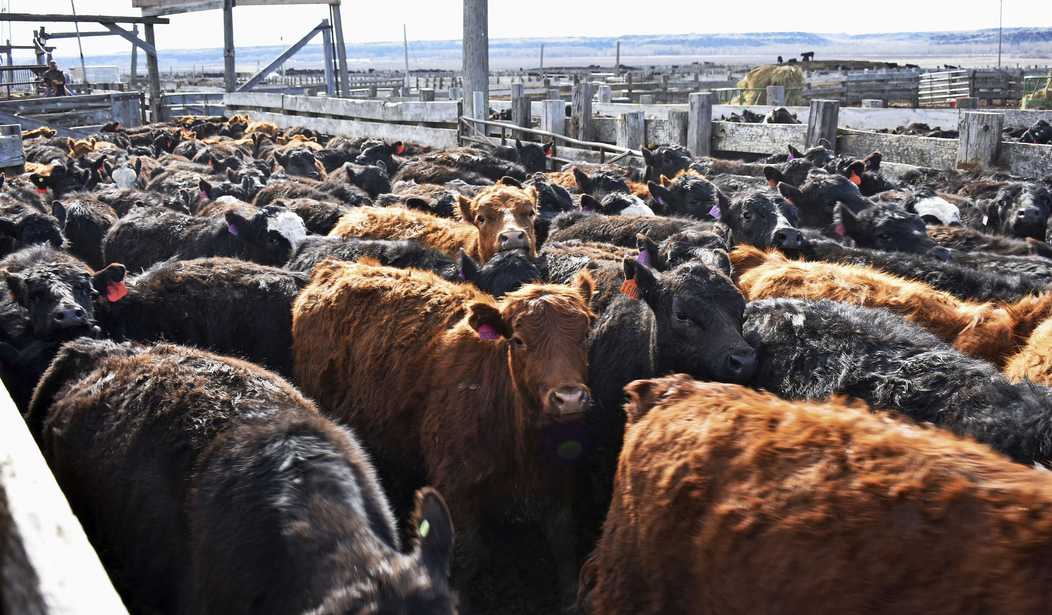
Beef prices are near record highs nationwide, and lawmakers in Washington are now focusing on a simple reality in the meat industry.
Four companies dominate the country's beef processing system.
Sen. Chuck Schumer (D-N.Y.) recently introduced legislation to break up large meatpacking conglomerates and limit the market share any single company can control.
A bill introduced Wednesday by Senate Majority Leader Chuck Schumer of New York would require meatpacking companies to focus on processing only one type of meat rather than operating across beef, pork, and poultry simultaneously. The proposal also includes new restrictions intended to curb beef market consolidation, Bloomberg reported.
The legislation arrives at a politically sensitive moment as U.S. consumers grapple with record-high beef prices. Rising grocery costs have become a focal point of voter frustration ahead of the November midterm elections, putting added pressure on lawmakers to address food inflation. According to Bloomberg, the spike in beef prices has intensified calls in Washington to examine whether market concentration among large meat processors is contributing to higher consumer costs.
The proposal attempts to force companies to specialize in one meat category while also capping their share of the beef market at both national and regional levels. Schumer argues consolidation leaves ranchers squeezed while grocery shoppers pay higher prices for hamburger and steak.
Market concentration sits at the center of the debate. Four firms dominate U.S. beef processing. JBS processes the largest share of cattle in the country. Tyson Foods ranks second and handles roughly one out of every five pounds of meat consumed in the United States. Cargill operates as the third major packer. National Beef Packing Company rounds out the group.
Combined operations from those four companies account for roughly 85% of beef processing capacity nationwide.
Several Senate Democrats argue that the level of concentration allows packers to exert enormous influence over prices paid to ranchers and prices charged to consumers. Sen. Elizabeth Warren (D-Mass.) has repeatedly criticized the meatpacking sector for allowing a small group of corporations to dominate the market.
Spartacus, Sen. Cory Booker (D-N.J.), has pushed legislation designed to strengthen antitrust enforcement in agriculture. Both lawmakers argue that consolidation allows large processors to capture profits while independent ranchers struggle to stay afloat. Ranchers have testified at congressional hearings that plant closures or processing slowdowns can immediately reduce the prices cattle producers receive for their livestock.
Past legal battles also shape the debate. Several meat companies have faced lawsuits over alleged price manipulation. JBS paid over $200 million in settlements tied to price-fixing claims involving beef and pork markets.
Tyson Foods has faced similar accusations in litigation involving poultry and meat pricing practices. Critics say those legal disputes reinforce concerns that concentrated markets can create opportunities for collusion or coordinated pricing strategies among large processors.
Yet consolidation alone doesn't explain the entire price surge. The U.S. cattle herd has fallen to its smallest level in more than 70 years after prolonged drought forced ranchers across western states to reduce herd sizes. Feed costs, fuel expenses, and borrowing rates have all climbed in recent years.
Those pressures raise costs for ranchers long before cattle reach a processing plant. When herd numbers fall, fewer cattle enter the supply chain, and beef prices rise across grocery stores and restaurants.
Those pressures raise costs for ranchers long before cattle reach a processing plant. When herd numbers fall, fewer cattle enter the supply chain, and beef prices rise across grocery stores and restaurants.
Trump ordered the Justice Department to examine competition and pricing practices in meatpacking as part of a broader review of the agricultural supply chain. The investigation examines whether major packers coordinated actions that affected livestock markets or consumer prices.
Trump has also criticized foreign ownership in parts of the food supply system, pointing to Brazil-based JBS and China-linked Smithfield Foods as examples of companies inside the U.S. market while headquartered abroad.
Industry leaders reject claims that consolidation alone drives high prices. Meat companies argue that modern processing plants require enormous investment, and large firms can operate facilities more efficiently than smaller competitors. Executives also point to rising labor costs, transportation expenses, and regulatory requirements that increase processing costs for cattle. Those factors ripple through the supply chain before reaching grocery shelves.
The current debate leaves lawmakers facing a difficult question. Market concentration remains obvious in the meatpacking industry. At the same time, drought, shrinking cattle herds, and rising operating costs push prices higher regardless of corporate structure.
Senate Democrats believe stronger antitrust enforcement could restore competition in livestock markets. Critics warn that breaking up large processors could reduce efficiency and disrupt supply chains that feed millions of American households.
Unfortunately, beef prices won't be falling quickly. Rebuilding cattle herds takes years, and new processing facilities require large investments. Yet the spotlight on meatpacking concentration has reopened a long-running national debate over competition, agriculture, and the power wielded by a handful of companies over one of the country's most important food industries.
For the first time in 2026, I believe a blind squirrel found an acorn. Not saying Democrats are blind squirrels. They're definitely rodents of sorts, but for this one issue, they're finding an acorn.