


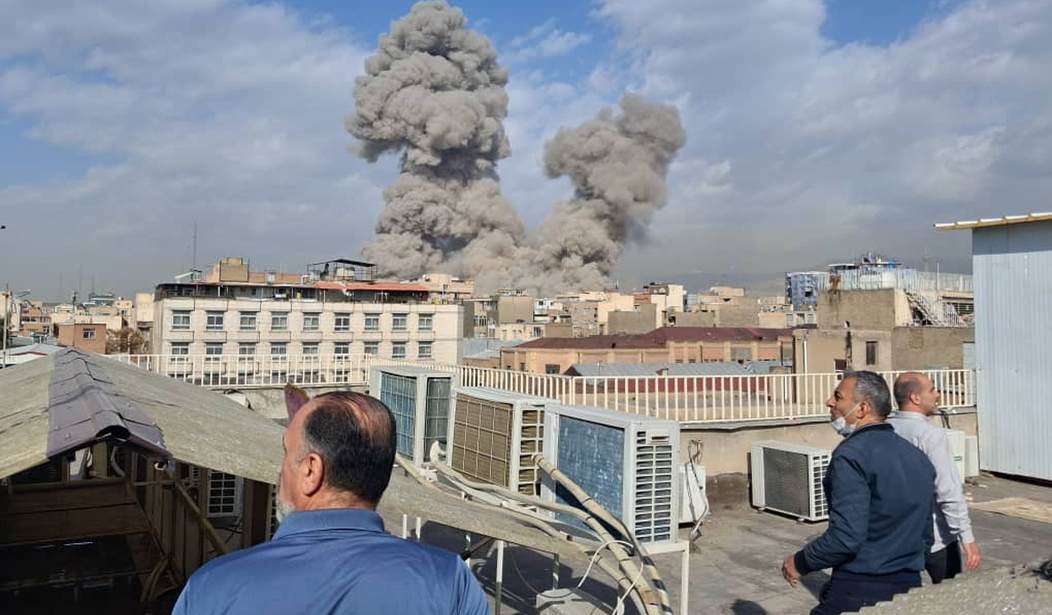
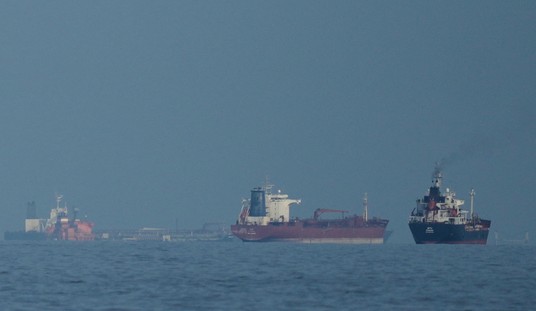
Iran launched retaliatory strikes across parts of the Gulf following the joint U.S.-Israel strikes in Operation Epic Fury. The region's response came quickly, and left no doubt about how the Gulf states feel. Several Arab governments condemned Tehran's actions, describing the strikes as reckless, destabilizing, and unacceptable.
Related: Did Trump Just Take Out Iran’s Supreme Leader?
Saudi Arabia's Foreign Minister Prince Faisal bin Farhan Al Saud denounced Iran's attacks, and warned that Tehran's actions threaten regional stability, stating that attacks on sovereign territory violate international law and undermine regional security.
Saudi Arabia announced it would aid countries in repelling Iranian attacks.
“Saudi Ministry of Foreign Affairs affirmed the Kingdom’s full solidarity with the countries concerned and its firm support for them, stating that it would mobilize all its capabilities to assist them in any measures they undertake,” the ministry said in a statement.
The UAE, in a statement, emphasized that the country’s security is “indivisible” from its Gulf neighbors and that any infringement on the sovereignty of any state constitutes a direct threat to the security and stability of the entire region.”
Qatar's Ministry of Foreign Affairs also condemned the strikes. Prime minister and Minister of Foreign Affairs Sheikh Mohammed bin Abdulrahman Al Thani urged restraint, but stressed that attacks on neighboring states can't stand.
In a statement, Qatar’s Foreign Ministry strongly condemned what it described as the targeting of Qatari territory by Iranian ballistic missiles, calling it a “flagrant violation” of its national sovereignty and a direct threat to its security and territorial integrity.
The ministry said Qatar “retains its full right to respond to this targeting in accordance with international law and in a manner proportionate to the nature of the attack,” stressing that such actions contradict “the principles of good neighborliness and cannot be justified under any pretext.”
The ministry added that Qatar has long advocated dialogue with Iran and consistently promoted peaceful dispute resolution, warning that renewed attacks on its territory “do not reflect goodwill and threaten the foundations of mutual understanding.”
It also condemned violations of the sovereignty of Kuwait, the United Arab Emirates, Jordan, and Bahrain, affirming Qatar’s full solidarity with those countries.
Bahrain's Ministry of Foreign Affairs labeled the attacks a violation of sovereignty and reaffirmed its security partnership with the United States. King Hamad bin Isa Al Khalifa has long aligned Bahrain with U.S. security initiatives in the Gulf.
Kuwait’s Foreign Minister Abdullah Ali Al-Yahya expressed deep concern, reiterating Kuwait's commitment to regional peace, while rejecting Iranian military escalation.
The country acting as a mediator between Tehran and Washington voiced concern over Iran's actions. Sultan Haitham bin Tariq called for calm, but made clear the danger of military retaliation on Gulf soil, which risks a wider conflict.
The coordinated condemnations signal that Iran faced limited regional sympathy. Tehran has long relied on proxy networks and selective alliances, but Gulf governments appear unwilling to tolerate direct strikes on their territory, a stance that leaves Iran increasingly isolated at a critical moment.
President Donald Trump authorized the U.S. role in the joint operation against Iranian targets, after repeated provocations and threats against American interests and Israeli security.
The Pentagon, which Secretary of War Pete Hegseth leads, described the operation as measured and strategic, with the administration framing the strike as a necessary step to prevent further Iranian aggression.
"We are going to destroy their missiles and raze their missile industry to the ground. It will be totally, again, obliterated," Trump said, adding, "We're going to annihilate their navy."
The president claims Iran was rebuilding its nuclear program ahead of the attack — Trump had often said the program was "totally obliterated" in the U.S. and Israeli attacks last June.
Trump also told the Iranian Revolutionary Guard Corps to surrender: "Lay down your arms. You will be treated fairly with total immunity, or you will face certain death."
Israeli Prime Minister Benjamin Netanyahu affirmed Israel's right to defend itself from Iranian threats. Israeli Defense Minister Yoav Gallant emphasized the continuing coordination with U.S. forces.
Therefore, we have launched Operation Lion's Roar, an operation far more powerful than Operation Rising Lion, which was already very powerful. We are doing this in full cooperation with our friends in the United States under the courageous leadership of President Trump. Together with the United States, we will strike hard at the terror regime and create conditions that will allow the brave Iranian people to cast off the yoke of this murderous regime.
During Operation Rising Lion, I was often asked whether the overthrow of the regime was the goal of the operation, in addition to removing the nuclear and missile threat. I replied that this was not the goal, but it could certainly be the outcome. And indeed, this is exactly what began to happen, with millions of Iranians taking to the streets. And now, now they are given the opportunity to take control of their own destiny. Citizens of Israel, as in Operation Rising Lion so too in Operation Lion's Roar, we all need patience and resilience. Because there will be costs, and perhaps even heavy costs. But I know the wonderful forces that lie within our people, the wonderful forces that lie within you, citizens of Israel. Since the Revival War began, we have stood together, and today too we will stand together in bravery, in brotherhood, in mutual responsibility. I ask all of you to strictly follow the instructions of the Home Front Command, because you already know, these instructions save lives.
The regional reaction is important: When Gulf capitals align against Tehran, it reshapes the political landscape. Saudi Arabia, the UAE, Bahrain, Kuwait, Qatar, and Oman represent key economic and strategic pillars in the Middle East, and their united message limits Iran's diplomatic space.
Coordination is now critical; military planning must align with diplomatic engagement, and intelligence sharing between Washington, Jerusalem, and Gulf partners determines whether the threat of escalation remains contained. Clear communication between allies reduces the risk of miscalculation.
Another important role is honest reporting; accurate coverage clarifies which governments stand firmly against Iranian aggression and which hedge their language. Public statements from Gulf leaders reveal a pattern of direct condemnation, not some notion of vague neutrality.
Iran's retaliatory strikes may have been aimed at projecting strength, but instead, they exposed how narrow Tehran's circle of support has become. Gulf governments signaled that attacks on their territory won't be met with broad silence.
If coordination holds, then a broader regional coalition appears possible. Allied governments share a common interest in stability, deterrence, and the protection of sovereign borders.
We'll see in the coming days whether unified condemnation evolves into sustained strategic alignment.
PJ Media remains committed to clear, fact-driven reporting on fast-moving global events. Right now, you can get 60% off a VIP membership with promo code FIGHT. Join today and support independent journalism that doesn’t blur the facts when they matter most.



Join the conversation as a VIP Member