


James Armistead Lafayette: 1748-1830
Author's Note: Courage rarely announces itself in key moments. It builds quietly through risk, resistance, and consequence, long before history picks winners for praise or memory.
The Courage They Didn’t Teach uncovers these stories one life at a time, advancing decade by decade from the mid-1700s onward. It skips hero worship to focus on times when backing down seemed bright, yet pressing on demanded real sacrifice.
Each entry spotlights one person who confronted danger, opposition, or erasure and stood firm without guaranteed payoff. Some faced blows in the open, enduring exile or violence. Others persisted through quiet restraint, patience, silence, or inner refusal to break under strain.
As a whole, the series upends the easy notion that courage belongs only to the bold, winners, or the famous. Instead, it emerges as a skill forged under pressure, molded by fallout, and honed well before any acclaim.
If acclaim comes at all.
Some wars reward the loudest charge, others reward the quietest presence. The most dangerous ground isn't always the battlefield. Sometimes it's a room full of officers who assume you don't know what they're saying.
Unfortunately for them, James Armistead knew every word.
Born without leverage
Born into slavery around 1748, James Armistead's early life left few written traces, which tells us a whole different story: Being a slave stripped him of legal identity, erased lineage, and denied ownership of his own labor. As expectations remained low, opportunities remained lower.
But war changes things.
As fighting intensified in Virginia, Armistead sought his owner's permission in 1781 to serve the American cause, entering the service of the Marquis de Lafayette, who needed intelligence more than muskets.
Getting information on the enemy was critical to Lafayette, who needed to stem the losses his forces were suffering at the hands of Cornwallis’s larger, better-supplied army. The French general was also under orders to capture the infamous traitor Benedict Arnold, who was causing chaos after offering his services to the British.
Posing as a runaway enslaved man, Armistead quickly infiltrated British forces via Arnold’s camp. While at first he took on menial tasks, his vast knowledge of the terrain—a trait that wouldn't seem suspicious for a local runaway—was useful to both Arnold and Cornwallis for British intelligence during the war. So they assigned him the task of spying on the colonies.
Armistead's status allowed him to move between camps without raising suspicion. British officers dismissed him as property; that dismissal became an advantage.
Moving between worlds
Armistead posed as a runaway slave seeking refuge with the British, whose commanders accepted him in their ranks as a laborer and courier. He carried messages, observed troop deployments, and absorbed strategy sessions that few American soldiers ever witnessed.
British General Cornwallis trusted Armistead enough to serve as his guide and messenger, providing him access and creating leverage.
It also appears that James had so effectively ingratiated himself with Cornwallis that the British commander accepted James' offer to act as a spy for the British. James then became a double agent as Lafayette employed him to keep the British troops right where they were by feeding Cornwallis, whose forces outnumbered Lafayette's small army, mostly false information about American troop strength and movement.
Taking advantage of the situation, Armistead provided false information to the British command, while sending accurate intelligence to Lafayette. He memorized supply movements, fortifications, and reinforced plans.
His exposure was a danger while traveling between each camp; if captured, there would be no prisoner exchange, and definitely no appeal: he would've been executed.
Yorktown and the trap
In late summer 1781, British forces under Cornwallis fortified positions at Yorktown, while American and French forces maneuvered to encircle them.
Here's where Armistead's work shone: Intelligence proved decisive; his reports helped confirm British troop strength and intentions. At the same time, his misinformation contributed to British misjudgments about American movements.
One of Armistead’s most valuable pieces of intel came near the end of the summer in 1781. He sent a note to Lafayette, detailing Cornwallis’s move from Portsmouth to Yorktown and the expected arrival of 10,000 British troops at the new location.
In response, Lafayette informed General George Washington, and the pair made preparations along with French General Comte de Rochambeau to set up a blockade by land and by sea around the Yorktown peninsula. The siege, combined with constant bombardment, weakened Cornwallis’s forces, forcing the British commander’s surrender on October 19.
The man who helped shape that outcome was still a slave.
Freedom delayed
Victory didn't mean immediate freedom; Virginia law required proof of military service for emancipation, and espionage left little visible proof. Armistead petitioned the state legislature, providing written testimony confirming his service and essential contributions.
With the end of the fighting came the end of James' service to la Fayette, so he returned to the life of a slave owned by Armistead. Unfortunately for James, because he was a spy and not an enlisted soldier, the 1782 law passed by the Virginia legislature to provide for the freedom of slaves who had served in the war did not apply to him. la Fayette, however, found a way to show his personal gratitude to James in November 1784 when he gave his "honest friend" a handwritten testimonial:
"This is to certify that the Bearer has done essential services to me while I had the honour to command in this State. His Intelligence from the ennemy's [sic] camp were industriously collected and most faithfully delivered. He perfectly acquitted himself with some important commissions I gave him and appears to me entitled to every reward his situation can admit of."
Virginia granted him his freedom in 1787. In gratitude, he added Lafayette to his name, becoming James Armistead Lafayette. Although recognition came, it arrived slowly.
Then, an uncommon acknowledgment arrived: he received a pension for his service.
Living off his annual pension fee, Armistead moved to his own 40-acre farm in Virginia, where he married, raised a family, and lived out the rest of his life as a freeman. Armistead added Lafayette to his name as a token of gratitude and a testament to the bond the former slave and French general shared.
Imagine a former slave whose work and survival depended on hiding in plain sight.
A different kind of battlefield
James Armistead Lafayette died on August 9, 1830, having lived as a slave, wartime spy, freedman, and pensioned veteran. His courage didn't include spectacle; it required restraint, memory, and patience measured in heartbeats.
Some men fight with rifles, others fight with concealment, and Armistead fought with attention, listening while others underestimated him. He moved through danger because invisibility granted him access that no rank could.
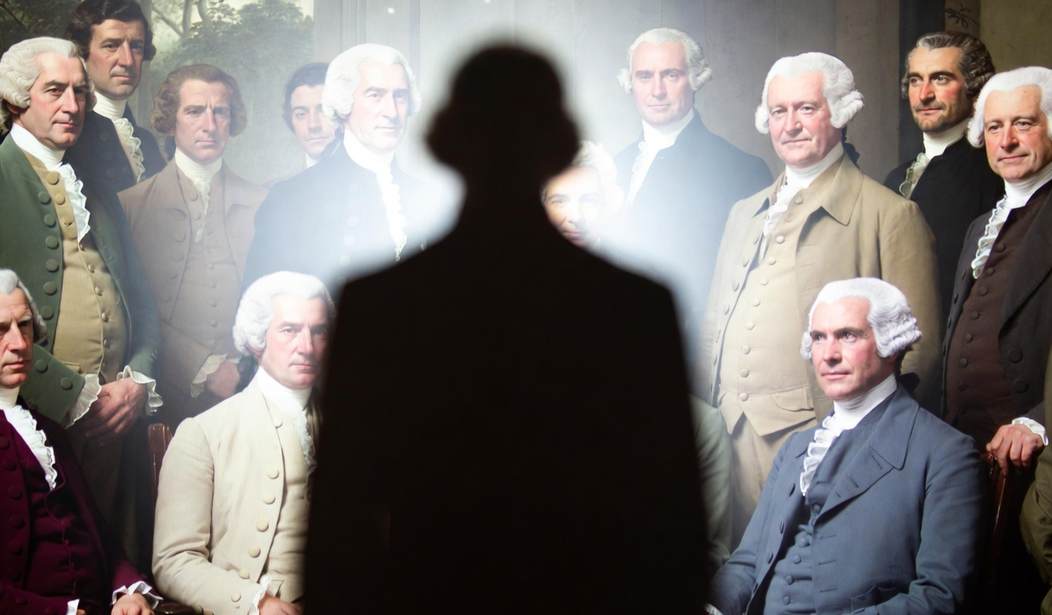
Voices rise inside as a door opens, with somebody standing at the edge of a dimly lit room; unnoticed, absorbing every word. History always celebrates the generals, while the quiet listener has already done the hard part.
Next in the series: Sybil Ludington
The next figure in the series rode through darkness with no escort and no guarantee that the riders she summoned would arrive in time. At sixteen, she covered miles of rough road in a single night to warn militia forces that British troops were advancing toward their towns. Her courage depended not on disguise or concealment, but on endurance and speed, knowing failure meant families caught unprepared. Sybil Ludington’s ride asks whether resolve measured in miles can carry the same weight as cannon fire.