


The heat was a constant enemy, creating sweat-soaked uniforms before sunrise and never drying them. Boots sank, ankle-deep, in mud, while insects clung to skin that was already raw from salt and grime. Rifles rusted, food spoiled, and malaria spread faster than orders.
On Guadalcanal, survival became the first task of the day, long before any clashes with the enemy.
Beginning in August 1942 and ending in 1943, American Marines fought two enemies: one they could see and another they couldn't. When the campaign ended on Feb. 9, Japan lost momentum in the Pacific War.
Why Guadalcanal Mattered
Guadalcanal fell under Japanese control in May 1942, while they rushed the construction of an airfield to threaten Allied supply routes to Australia and New Zealand. Controlling the Solomon Islands enabled Japan to extend its power southward.
After the battle of Midway, Allied planners launched Operation Watchtower, accepting significant risk to regain initiative.
U.S. General Alexander Vandegrift led the 1st Marine Division into an island with a dense jungle, limited intelligence, and fragile supply lines.
Japanese commanders knew a brief defense would lead to a quick victory.
They'd never faced United States Marines before.
Landing Into Uncertainty
Two thousand Japanese defenders were surprised to discover U.S. Marines landing on Guadalcanal on Aug. 7, 1942. Not only did they land, but they also secured the unfinished airfield within days.
Renamed Henderson Field, the strip became the campaign's lifeline; holding it meant food, ammunition, and air cover. Losing it meant collapse.
The battle stretched across land, sea, and air for six relentless months. Japanese forces repeatedly launched massed assaults, including large-scale banzai charges meant to overwhelm the thin American lines.
At the Battle of the Tenaru, Marine discipline and fire control stopped coordinated attacks cold. Eventually, U.S. troop strength grew to 60,000, while Japanese reinforcements peaked near 36,000.
The Cost of Holding Ground
The island punished both sides without mercy; American forces suffered around 1,600 killed in action, with more than 4,200 wounded, while malaria and disease sidelined thousands more. The total amount of U.S. deaths was over 7,000.
For Japan, losses reached about 24,000, including over 14,000 killed in battle and thousands more who died from starvation and illness.
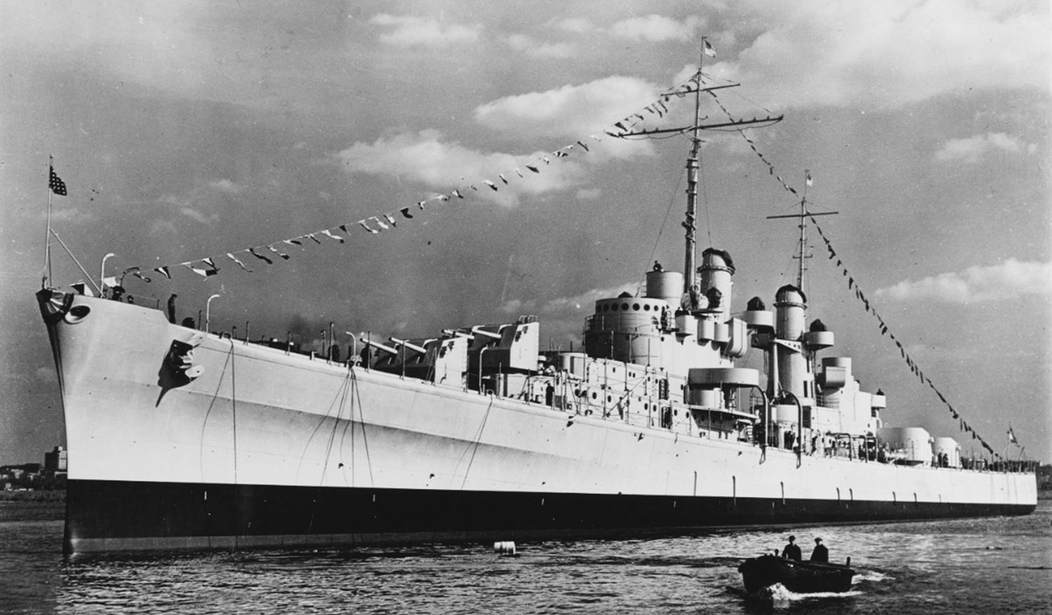
Naval battles were equally destructive; both sides lost 24 warships. Two Japanese battleships went down, four cruisers, and a light carrier. American losses included eight cruisers and two aircraft carriers.
Hundreds of aircraft fell for each side.
Japanese Strategy Breaks Down
Imperial Japanese Navy Admiral Isoroku Yamamoto knew how critical Guadalcanal's position was in the Pacific, and urged decisive action. However, delays and logistics erased that urgency. Commanding the ground forces was Harukichi Hyakutake, a leader who never received steady or timely supplies or reinforcements. The greatest enemy facing Japanese forces was hunger, which weakened units more quickly than American fire. Naval efforts failed to neutralize Henderson Field, and by December, Japanese leadership accepted the new reality and began the evacuation process, which ended on Feb. 9. Then the Japanese altered their focus to New Guinea.
What Victory Changed
Guadalcanal stopped Japanese expansion southward, securing the Solomon Islands, as Allied forces gained a much-needed forward base to project sustained air and naval power. Having control of Henderson Field meant the U.S. would deliver constant pressure on Japanese supply lines and fleet movements.
Operation Watchtower marked the first major Allied land offensive against Japan, proving that Imperial forces could be defeated through persistence and coordination. The resulting victory opened the way to the Philippines and deeper into the Pacific.
Echoes Beyond the Battlefield
Morale at home improved as news of the victory reached America. Early-war uncertainty gave way to cautious confidence as reports highlighted Marine endurance under punishing conditions.
Because of the loss of the Sullivan brothers aboard the USS Juneau, national grief deepened. Using newspapers and newsreels, families followed the progress of the war and sensed the momentum had shifted. Guadalcanal restored the belief that America could win the Pacific War.
The island demanded endurance, where Marines fought through heat, hunger, and disease without reliable supply lines. Japanese determination met American resolve until attrition determined the victory.
Lessons from Guadalcanal were shared across every campaign that followed, reminding us that wars often turn quietly, one day at a time.
Medal of Honor
Twenty men earned the Medal of Honor, including General Vandegrift and Sergeant John Basilone. Those men deserve every honor a country can bestow. Here's the list of recipients in alphabetical order.
- Major Kenneth D. Bailey, USMC
- Gunnery Sergeant John Basilone, USMC
- Lieutenant Colonel Harold Bauer, USMC
- Rear Admiral Daniel J. Callaghan, USN
- Corporal Anthony Casamento, USMC
- Major Charles W. Davis, USA
- Captain Jefferson J. DeBlanc, USMC
- Colonel Merritt A. Edson, USMC
- Captain Joseph Foss, USMC
- Sergeant William G. Fournier, USA
- Major Robert E. Galer, USMC
- Technician Fifth Grade Lewis Hall, USA
- Boatswain's Mate First Class Reinhard J. Keppler, USN
- Lieutenant Commander Bruce McCandless, USN
- Signalman First Class Douglas A. Munro, USCG
- Platoon Sergeant Mitchell Paige, USMC
- Lieutenant Commander Herbert E. Schonland, USN
- Rear Admiral Norman Scott, USN
- Major John L. Smith, USMC
- General Alexander A. Vandegrift, USMC