


Miyamoto Musashi was the greatest swordsman who ever lived - victorious in over 60 duels, most to the death. His most famous encounter was when he killed Kojiro, “Demon of the Western Provinces,” with a bokken he carved from a spare oar during the boat ride to the duel site. Kojiro was furious that Musashi had arrived hours late, with only a piece of wood in his hand. Sensing his blinding anger, Musashi told him, “You have already lost,” and so he had.
Years later, as thoracic cancer began to slowly take his life, Musashi retreated to a cave to meditate. While there, he wrote his famous Book of Five Rings, using as its theme the five Buddhist elements of earth, water, fire, wind, and the void (emptiness).
From the earth, the foundation is emphasized, as if building a house. Strategy is key, but learned not through words, but by experience and practice, practice, practice. “These things cannot be explained in detail. From one thing, know ten thousand things. When you attain the way of strategy, there will not be one thing you cannot see. You must study hard.” The student is advised to seek out the opponent’s weakness and to master timing.
In the book of water, flexibility and adapting to circumstances as they occur are emphasized. One must be in the present. Focus must be direct and centered, “…it is essential that you be constantly intent on stabbing his face… he will pull his face and his body back. If you can make him do this, you will have various advantages for victory.”
In the book of fire, quickly turning the opponent’s weapons and strength against him is advised, as well as controlling the energy and tempo of the contest. Knock out his “support beams” if you will, and his edifice will fall in on itself.
The book of wind is a bit of an inside joke, because the words for wind and style are similar. Your style should not be complex with a lot of flourishes. Swordsmanship is simply a method of cutting down your opponent. Be efficient.
The book of void was his shortest and most important. This is an emptiness of the self, so that one’s ego, emotions and preconceptions do not interfere with the task at hand. This is the state of mushin, or “no mind,” i.e., pure awareness, or being in the present.
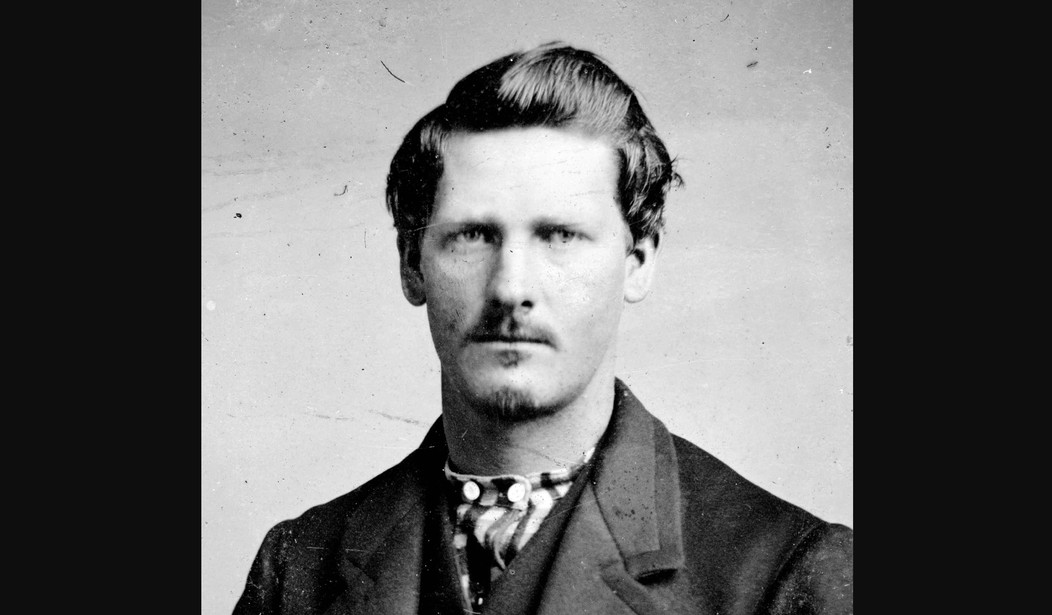
And Wyatt Earp? He became adept at a method of controlling drunk cowboys whose guns might cause mischief by being directly focused and turning their own weapons against them. If the cowboy refused to hand over his gun or was otherwise uncooperative, Wyatt would look them right in the eye with that thousand-yard stare, march right up to them, and in a flash, grab their gun and smack the barrel up against the side of their head, in a technique known as “buffaloing.”
Wyatt Earp’s most famous encounter was, of course, the gunfight in an alley near the rear entrance of the OK Corral in Tombstone. Just about the whole town saw that famous walk of the Earp brothers and “Doc” Holiday as they turned the corner from 4th Street onto Fremont and down to where the cowboys were waiting. Wyatt’s stare was cold, and every step seemed purposeful. He was already in a state of “no mind” when they reached the cowboys. Billy Clanton and Frank McLaury drew their guns. Billy fired at Wyatt and barely missed, but Wyatt ignored him and immediately shot Frank McLaury in the guts.
He testified later that, if it came to a fight, he had determined to take Frank down first, since he was known to be the best among them with a gun. The man clearly had ice water running in his veins. Every participant in that gun battle was either killed or wounded, except for Wyatt. Some say it was because, unlike the others, he never moved. In the excitement of a gunfight, people tend to shoot at what moves, because movement catches the eye. In a sense, he made himself invisible - the perfect emptiness, or void at the center, and completely in the moment.
The shootout at the OK Corral is the most famous gunfight of the Old West, but Wyatt was engaged in another that defies the imagination. As Wyatt, “Doc,” and a few others were trying to hunt down the cowboys, they were ambushed by them at a place called Iron Springs in the Whetstone Mountains. “Doc” and the rest quickly withdrew, not being sure where the shots were coming from. Wyatt did not. With bullets whizzing past him, one shooting off the pommel of his saddle and another hitting his bootheel, Wyatt dismounted. He had loosened his gun belt for ease of riding, and it dropped around his thighs. He calmly cinched that back up, then went around his horse to pull a shotgun from a scabbard.
Curly Bill Brocius watched this, amazed. Curly Bill also grabbed a shotgun, and the two men approached each other. But Curly Bill was not “in the moment.” In haste, he fired his shotgun before he had it leveled, and the pellets went all around Wyatt’s legs, shredding his long duster, but missing his legs entirely. Wyatt pulled back both hammers on his shotgun, leveled it, and basically cut Curly Bill in two. Upon seeing this, the rest of the cowboys scattered.
Those who knew Wyatt Earp most often described him as “deliberate.” Nothing about the man even hinted at frivolity. His only indulgence seemed to be ice cream, a novelty Tombstone provided. Perhaps the most famous words attributed to him are, “Fast is fine, but accuracy is final. You must learn to be slow in a hurry.” Miyamoto Musashi would have approved.
Editor's Note: Do you enjoy PJ Media's conservative reporting that takes on the radical left and woke media? Support our work so that we can continue to bring you the truth.
Join PJ Media VIP and use promo code FIGHT to receive 60% off your membership.






Join the conversation as a VIP Member