


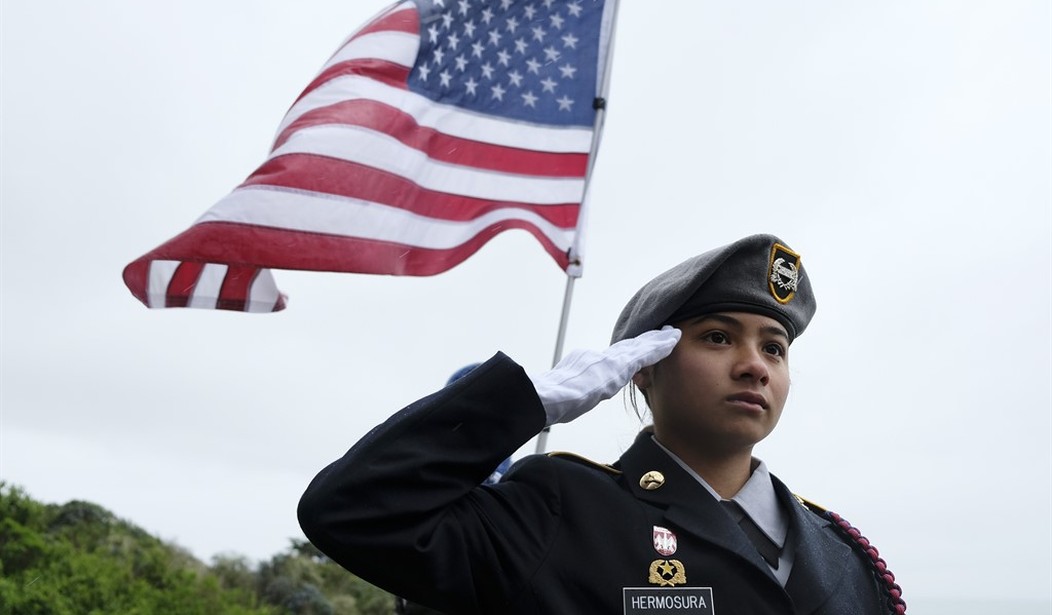
Imagine your ninth grader comes home not long after school starts, and out of a desire to belong (the strongest of teenage drives), he says he wants to join this gang, one that proudly wears its “colors” openly in school with impunity. As you look into it, you find this gang has an unusual initiation oath:
…I will always conduct myself to bring credit to my family, country, school and (name of the gang). I am loyal and patriotic. I am the future of the United States of America. I do not lie, cheat or steal and will always be accountable for my actions and deeds. I will always practice good citizenship and patriotism. I will work hard to improve my mind and strengthen my body. I will seek the mantle of leadership and stand prepared to uphold the Constitution and the American way of life. May God grant me the strength to always live by this creed.
After joining, his self-esteem grows, based upon a realistic sense of his own accomplishments. He stands proud and makes you proud.
This could be the reality for thousands of kids across the country if we demand it, because that creed begins with “I am a Junior ROTC Cadet.” (The above creed is the Army version. Schools may have Army, Navy, Marine Corps, Air Force, Coast Guard, or now even Space Force JROTC.)
Odds are that, on the first day of a JROTC class, a retired officer (ably assisted by a retired NCO) will say something like this: “Play it straight with me, and you can come to me with any problem, in school or out. We’ll work through it together.” JROTC instructors are the highest caliber mentors around, on a simple, focused mission: to build character in our young people.
The JROTC course books are in an entirely different universe from the “woke” revisionist anti-American pablum too often found in high school textbooks. Here are some of the chapters:
- "Becoming a Model Citizen"
- "Making the Right Choices"
- "Winning Colors — Excellence is not an Accident"
- "Working Out Conflicts"
- "You Can Become a Leader"
- "The Constitution"
- "We are Americans"
Some of the topics covered are the rights, responsibilities, and privileges of citizenship; career opportunities (both military and civilian); goal setting; budgeting skills; self-knowledge; fitness; first aid and health; map reading; and respect for constituted authority.
This character-building mission would be a failure if it weren’t mixed with a lot of fun. There are plenty of sports and games. Your kid is not exactly the athletic type? No worries. While there is competition, the main emphasis is on cooperation and teamwork. Attitude counts far more than prowess.
Every cadet in good standing is allowed to participate in any or all extracurriculars: rifle team, drill team, color guard, and raiders (cadet challenge). This last was our oldest daughter’s favorite. This is a competition in calisthenics, obstacle course, land navigation, rope bridge, and first aid application. Good leadership and teamwork usually win the day.
If a kid really catches the JROTC bug, there is summer camp. There, they live “the life:” reveille, mess hall, taps, and a VERY full day in between. They qualify for marksmanship, rappel from towers, run obstacle courses, take science classes, and engage in leadership reaction training. This last I personally observed when we visited our oldest at camp many years ago. Counselors placed the cadets in teams of ten, and the teams selected a leader. The teams were then challenged with two dirt ramps separated by a gap that represented a raging flood. Counselors gave the cadets boards of various lengths (all of them too short) and a hundred-pound barrel. They had 15 minutes to get themselves, the barrel, and the boards across. The leader solicited suggestions, and the team made various attempts, discarding failures and exploiting successes. Utilizing the unique characteristics of each team member was counted in the team's favor.
I asked a couple of colonels if this emphasis on problem solving and adaptability rather than martinet discipline was uniquely American. “You got it,” one of them said. “Let’s say the three of us go out, and you get taken out. I’d feel bad about that, but I’m trained to do what you do, and he’s trained to do what I do. The job gets done. The Russians don’t train like that. Hell, even the British could improve on this.” As our Marines say, “Improvise, adapt, overcome.”
America needs more JROTC now more than ever in its schools, and we must insist upon it. Right now, only about 15% of our high schools have such a program. Did you know that more than half of all Americans can’t tell you what the three branches of government are, and only 16% of Gen Z feel proud of their country? Lest anyone fear that the program is simply a military recruiting scheme, know that only about 25% of JROTC cadets eventually join the military. Meanwhile, JROTC cadets are more likely to graduate, and have better grades, lower suspension rates, and higher attendance rates, compared with non-cadets.
Two of our kids simply took all that character building and went on to college and beyond, far better equipped to handle whatever life threw at them. Our oldest had a hard time at first. She was going through that adolescent awkward stage, dropping her rifle and having trouble keeping in step, but there’s a bit of the bulldog in her. She was eventually awarded “Most Improved Cadet” (an award her sister won two years later). She decided to stay in the “gang” for another 10 years or so. The girl who kept dropping her rifle went on to West Point, Afghanistan, Iraq, the Meritorious Service Medal and the Bronze Star, this last for going “outside the wire” to gather intelligence that saved the lives and limbs of her comrades.
Recommended: A City Upon a Hill
Editor's Note: Thanks to President Trump and War Secretary Pete Hegseth's leadership, the warrior ethos is coming back to America's military.
Help us report on Trump and Hegseth's successes as they make our military great again. Join PJ Media VIP and use promo code FIGHT to receive 60% off your membership.





Join the conversation as a VIP Member