
A little more than 30 years ago, I worked as a dock supervisor for a regional trucking company. A local city driver named LC was someone we all worked with. LC was a large, very imposing figure. When you saw him out in the wild walking down the street, he was the guy most people would cross the street to avoid. However, if you had the chance to talk with LC, you would realize within 30 seconds that he was the kindest, most sensitive, calmest, and least threatening man you could find anywhere, despite a (falsely) perceived threat.
LC and I were talking one day on the dock while his truck was being loaded with the day's deliveries. The conversation drifted into the “what did you do before this gig?” territory. He explained that back in the 1970s he was a long-haul trucker who went coast to coast. Moving on a few minutes later, we drifted into food topics (surprise, surprise, I talk about food a bunch). He went on to tell me about how one of the best things he enjoyed was eating while on the road. I was kinda perplexed because my experience of eating while on the road as a trucker consisted of “greasy spoons” and the like. He went on to mention that he cooked his own food while driving. I was perplexed, obviously. He explained that he roasted chicken while going from point A to point B. This didn’t compute. Here’s what I learned.
Related: Let's Eat! Hog Heaven
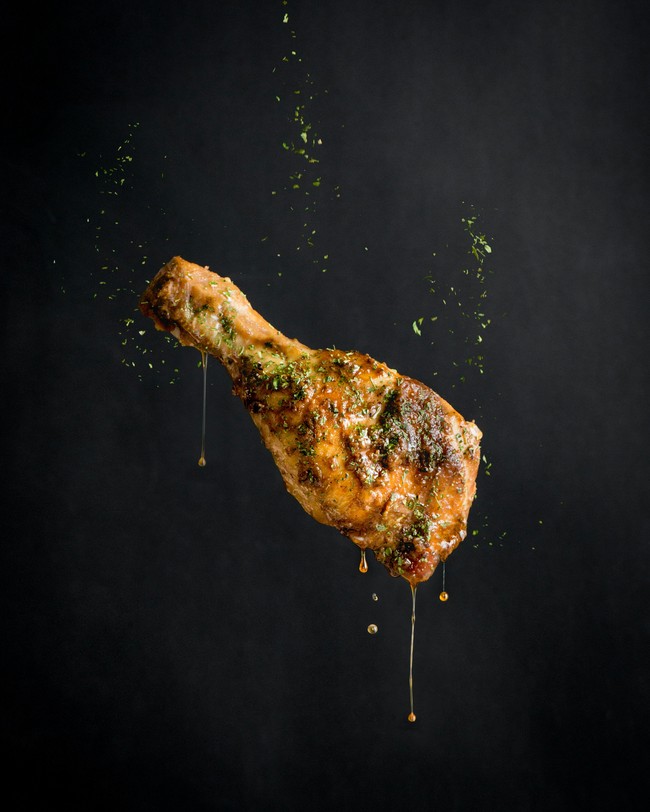
Before LC started a leg of his journey, he would take a whole chicken and season it to his liking (salt/pepper/garlic powder/etc.). Then he would triple-wrap it in foil (making sure to seal all ends) and place it on top of the engine on the manifold to “cook” while he drove. After four or five hours, he was ready for a break and his freshly roasted chicken. “Sure enough,” he said, “that darn chicken was finger lickin’ good and seasoned just the way I like it.” I was gobsmacked to say the least. How? What? Huh?
About the same time, I was looking at my freshly delivered copy of HOT ROD magazine. It had a blurb for a book by Chris Maynard and Bill Scheller called Manifold Destiny. The book is kind of tongue-in-cheek, mixed in with some serious science and factual info on how to actually cook on an engine. Yep. Really.
I ordered the book immediately. The rest is history, and here I am speaking to you now about how to quite possibly cook the weirdest way in 2026. You're welcome in advance.
This is where you will have to adapt a bit. As you are well aware, modern car engines are covered in wires and plastic covers over just about everything. Back in the olden days, an engine was topped with a carburetor and an air filter. Lots and lots of room on the top of the manifold to place a whole chicken triple-wrapped and hermetically sealed in foil. So you may need to scope out your available real estate for a foil-wrapped package first. Assuming that you are driving a newer model vehicle, let's say you have room for a 10x4 package. This should be more than enough for a couple of good-sized pieces of chicken in foil. Season as you like, whether you use individual seasonings (salt, pepper, cumin, garlic or onion powder, rosemary, etc.) or a blend. Using bone-in, skin-on chicken pieces should keep it moist enough that you don’t need to add liquid (I encourage you to NOT add any). Maybe add a wedge of a vegetable that has enough liquid to contribute to the mélange of flavors? How about an onion wedge? Once it's wrapped, place it in a secure nook on top of the engine (do not place it near any moving parts: belts, pulleys, etc.) and go for a few-hour drive. Pull over safely and unwrap to check the progress. If you bring a meat thermometer, the better, because chicken should be cooked to an internal temperature of 165 degrees.
Let me know how your cooking adventure turned out. I’m dying to know.
LET'S EAT!