


Eighty years ago, one of the most unique voices in American humor entered the world. On Oct. 20, 1946, Lewis McDonald Grizzard Jr. was born at Fort Benning, Ga. He only spent 47 years on this planet, but he left an incredible mark on it — one that ripples through to this day.
Grizzard grew up in Moreland, Ga., where he and his mother moved in with her parents after Lewis Sr. left them. "Daddy came home from [the Korean War] a complete mess, the Army did nothing to help him, and he died young," Grizzard would later recall.
He caught the writing bug early, and he wrote accounts of his Little League team that the Newnan Times-Herald published. He attended the University of Georgia, where he studied journalism and wrote for the Athens Daily News rather than for the student paper, The Red and Black.
Grizzard left UGA early to become the sports editor of the Atlanta Journal, the youngest-ever editor at that paper, when he was only 23. (He finally completed his degree in 1984.) There, he covered notable events like the plane crash that killed the Marshall University Thundering Herd football team and Hank Aaron’s 715th home run.
In 1975, Grizzard took a job as the executive sports editor for the Chicago Sun-Times, a move that made him miserable. As a dyed-in-the-wool son of the South, he wasn’t used to the brutal Chicago winters of the ’70s, and he courted controversy.
Grizzard fired Lacy Banks, the paper’s first black sports columnist, which led to charges of racism. Never mind that he replaced Banks with Thom Greer, another black writer who would become one of the first black major newspaper editors. A federal arbitrator gave Banks her job back, but a radio announcer said that Grizzard was “guilty by geography.”
Only 17 months after relocating, Grizzard was back in Atlanta writing sports pieces for the Atlanta Constitution. But it didn’t take long for him to switch to the humor and lifestyle columns that became his bread and butter. At the peak of his popularity, 450 newspapers syndicated his work, and Atlanta’s legendary alternative journal Creative Loafing had to create a yearly best-of category of “Best Columnist Besides Lewis Grizzard.”
He Was There: 'Between the Hoses': 40 Years After Auburn Soaked Georgia Fans in a Bitter Defeat
Grizzard’s columns were uniquely Southern and rich with sentiment. No one would mistake his love for the Bulldogs and the Braves. He wrote candidly about his heart troubles and his bad luck in love — he was married four times, including three divorces.
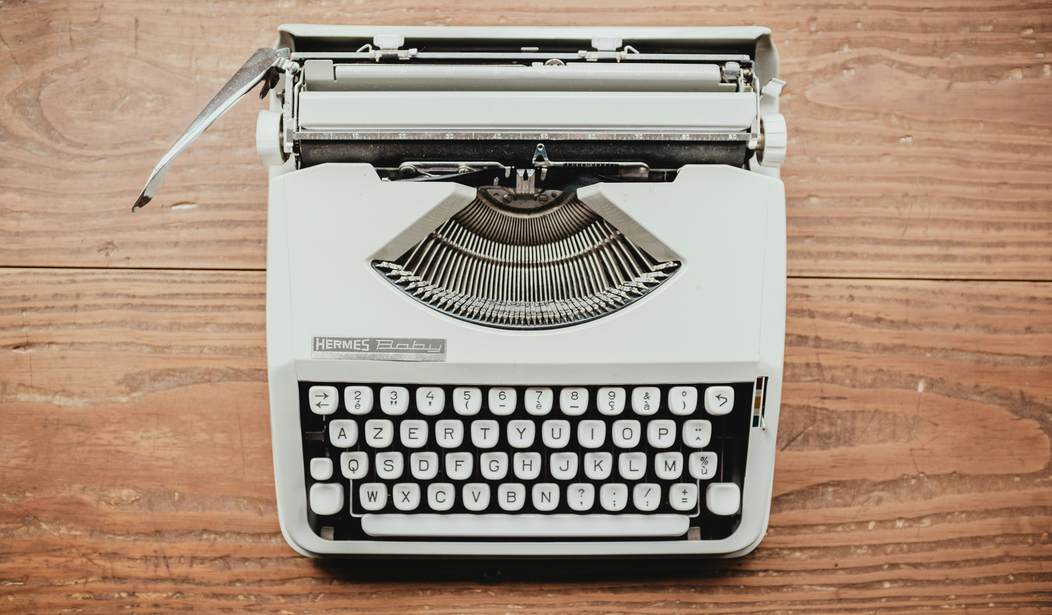
He was an old soul in a rapidly changing world. He wrote on a typewriter because, as he phrased it, “When I write, I like to hear some noise.” His attitudes were those of Southern baby boomers, and he chafed against the changing nature of the South in the latter half of the 20th century. He wrote about gay people and feminists in ways that surely would’ve gotten him canceled in the censorious 21st century. I often wonder what he would think of today’s world.
The New Georgia Encyclopedia highlights Grizzard’s self-contradictions:
In the self-deprecatory tradition of southern humorists, Grizzard often called himself a redneck, but as journalist Peter Applebome has observed, he was actually “the patron saint of the new suburban South, where you could have both the values of the old general store and the designer label wares of the megamalls.” He lived in Atlanta’s exclusive Ansley Park, his footwear of choice was Gucci loafers (worn without socks), he was partial to Geoffrey Beene cologne, and he used the gun rack behind the seat of his truck to hold his golf clubs. Although he protested that he liked pork barbecue much better, he owned up to eating caviar at Maxim’s in Paris and even to visiting the Louvre Museum.
Grizzard published 25 books, many of which were compilations of his columns, and several of which became bestsellers. My Daddy Was a Pistol, and I’m Just a Son of a Gun chronicled his difficult relationship with his father, while If I Ever Get Back to Georgia, I’m Gonna Nail My Feet to the Ground told the story of his short stint in the Windy City. He also co-wrote a recap of the Georgia Bulldogs’ 1980 national championship season with the ageless UGA sports historian Loran Smith.
He appeared on Designing Women and was a frequent guest of Johnny Carson’s. He also spent time on the comedy circuit, although it’s not quite right to classify his material as stand-up. Instead, it was Southern storytelling humor at its finest. Wikipedia lists nine albums of his comedy work, as well as one DVD.
Grizzard suffered from a congenital heart defect that involved his heart valves. I remember one of his quotes that I didn’t quite understand at the time: "There are three little leaflets that control the flow of blood to the heart. I was born with only two of those leaflets. It was just after the Great War, so there may have been a shortage. Either that or my daddy didn't get a good toe-hold."
Lewis Would Be So Proud: Georgia's Raylen Wilson Delivers a Lesson in Sportsmanship After Alabama Showdown
Shortly after his fourth marriage, he had his fourth heart-valve surgery. The chances of his surviving this one were 50-50. During the surgery, he suffered brain damage and never regained consciousness. He was only 47 when he died, and in accordance with his wishes, they spread his ashes on the 50-yard line at Sanford Stadium at the University of Georgia.
His hometown of Moreland has a museum in his memory, which I want to visit someday. The University of Georgia’s Grady College of Journalism and Mass Communications keeps one of his typewriters on display as well.
Grizzard was eminently quotable. One of my favorite quotes of his is one that I cite often about a particular Southern term: “There's a big difference between the words ‘naked’ and ‘nekkid.’ ‘Naked’ means you don't have any clothes on. ‘Nekkid’ means you don't have any clothes on — and you're up to something.”
Lewis Grizzard didn’t necessarily make me want to become a professional writer. I’m not sure I ever had some grand moment when I decided that writing would be my calling (unless you count when I saw Dead Poets Society in the theater). What he did was make me want to be a better writer, whatever I happened to be writing.
He showed me that good writing didn’t have to sound lofty or literary to stay with you. It could sound like somebody sitting across the table telling you a story — funny one minute, poignant the next, and unmistakably himself all the way through. Oh, and he made writing like a Southerner seem not only possible but respectable. He made me want to find that kind of voice in my own writing.
Good Lord, he was gone too soon — how I’d love to have heard his thoughts on the 1996 Olympics in Atlanta, the Braves’ 1995 and 2021 World Series wins, and the Dawgs’ back-to-back national championships in 2021 and 2022. I tried to imagine the advice he could’ve given me, and all I can come up with is: “Be Southern. Be willing to laugh, especially at yourself. But above all, be true to yourself.”
Lewis Grizzard understood something that too many people have forgotten: You can love where you come from, laugh at its quirks, and tell the truth without apologizing for any of it. That's the kind of writing we believe in at PJ Media, too.
If you appreciate independent journalism, unapologetic opinions, and writers who aren't afraid to speak their minds, become a PJ Media VIP member today. You'll save 60% with the promo code FIGHT. You'll get exclusive content while helping us keep telling the stories the mainstream media would rather ignore.
Use the promo code FIGHT and save 60% on your VIP membership today!
Join the Conversation
VIP members get the ability to comment on articles.