


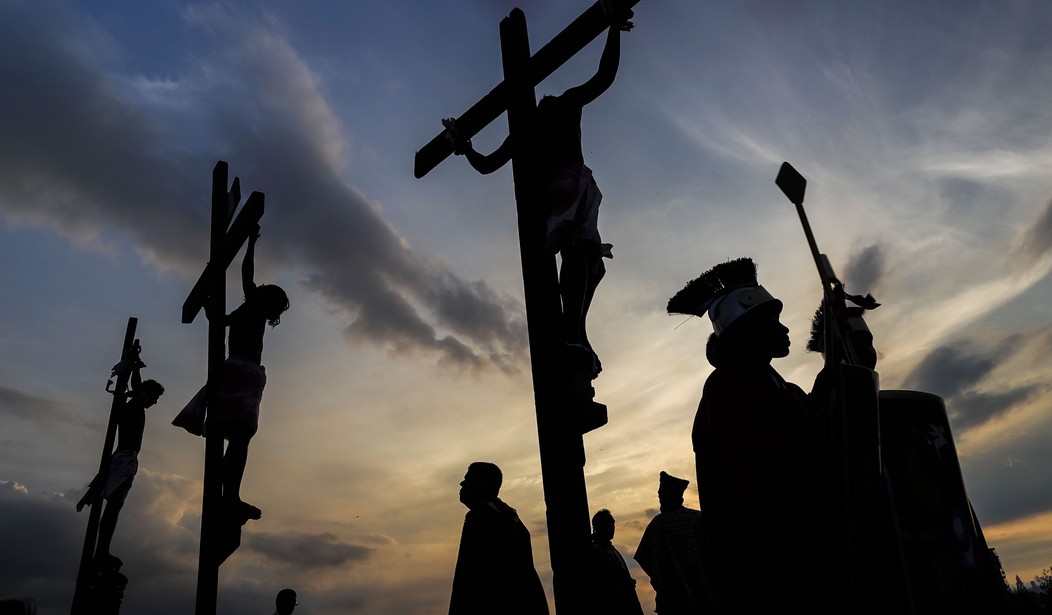
Christians across the globe commemorate Good Friday as the day Jesus was crucified and died. We focus on the statements that Jesus made from the cross, but in this column, I want to focus on the last thing He said before he died.
After this, Jesus, knowing that all was now finished, said (to fulfill the Scripture), “I thirst.” A jar full of sour wine stood there, so they put a sponge full of the sour wine on a hyssop branch and held it to his mouth. When Jesus had received the sour wine, he said, “It is finished,” and he bowed his head and gave up his spirit. (John 19:28-30, ESV)
Side note: I want to unpack the sour wine on hyssop before we dive into the meat of this column. Sour wine hearkens back to Psalm 69:21, the second half of which reads, “…for my thirst they gave me sour wine to drink.” And do you know what the Israelites used hyssop for? Painting the blood of the lamb on the doorposts for Passover. The Bible is cool like that.
But take a look at what Jesus said right before he died: “It is finished.”
The Greek word for the phrase “It is finished” is tetelestai (τετέλεσται). It doesn’t just mean, “We’re done.”
Bible.org summarizes the legal and financial meaning of tetelestai:
The word tetelestai was also written on business documents or receipts in New Testament times to show indicating that a bill had been paid in full. The Greek-English lexicon by Moulton and Milligan says this:
“Receipts are often introduced by the phrase [sic] tetelestai, usually written in an abbreviated manner...” (p. 630). The connection between receipts and what Christ accomplished would have been quite clear to John’s Greek-speaking readership; it would be unmistakable that Jesus Christ had died to pay for their sins.
“In Greek military context, tetelestai was used by soldiers returning from battle to report that their mission had been completed — not just attempted — completed, every objective of their order was fulfilled and carried out,” explains Grand Canyon University. But there’s one more use for tetelestai.
“Lastly, in the temple courts, tetelestai was spoken by priests after inspecting a sacrificial lamb and finding it without blemish,” Grand Canyon University continues. “When the offering met every requirement, the priest would declare it acceptable for sacrifice.”
Related: The Threads Between Passover and Good Friday
Jesus’ death on the cross was the full payment of our debt of sin, the completed mission of the Messiah, and the acceptable sacrifice to defeat death, hell, and the grave. The declaration of tetelestai meant that Jesus paved the way for those who put their faith and trust in Him to have an eternal relationship with Him.
Scott Hubbard writes at Desiring God:
On the cross, Jesus accomplished everything necessary for his people to be with him forever. The Bridegroom gave himself for his bride, so that she might be spotless and resplendent (Ephesians 5:25–27). The Shepherd laid his life down for the sheep, so that they might dwell safely in his fold (John 10:11). The Priest offered himself upon the altar, so that anyone covered by his blood might approach him in the Most Holy Place (Hebrews 7:27).
Out of the anguish of his soul, Jesus saw his people clothed in his own righteousness, and with satisfaction, he said: “It is finished.”
Jesus’ declaration of tetelestai wasn’t just a simple statement. It was loaded with meaning and symbolism. And it changed eternity.
This Good Friday, reflect on what Jesus accomplished on the cross. But remember: Sunday is coming!
I’ll leave you with a spoken-word monologue my pastor, Kurt Petersheim, did for our church’s virtual Easter service during the COVID-19 lockdown in 2020.








Join the conversation as a VIP Member