Yeah, I either missed last week, or this is a really late Sunday Supplement. Lots of things came up — a fair bit of news, and talking people off metaphorical ledges — but this week's is longer.
Sagan was right. We are made of stars.
The hydrogen in your body and present in every molecule of water came from the Big Bang. There are no other appreciable sources of hydrogen in the universe. The carbon in your body was made by nuclear fusion in the interior of stars, as was the oxygen. Much of the iron in your body was made during supernovas of stars that occurred long ago and far away. The gold in your jewelry was likely made from neutron stars during collisions that may have been visible as short-duration gamma-ray bursts or gravitational wave events. Elements like phosphorus and copper are present in our bodies in only small amounts but are essential to the functioning of all known life. The featured periodic table is color coded to indicate humanity's best guess as to the nuclear origin of all known elements. The sites of nuclear creation of some elements, such as copper, are not really well known and are continuing topics of observational and computational research. Image Credit: NASA's GSFC, SVS
— NASA Astronomy Picture of the Day (@apod) September 16, 2026
I think the L5 Society used the slogan "Space Is a Place" in the past. It is, but it's a different place.
🌌 In space, two pieces of metal can fuse together without heat, glue, or welding equipment. And the reason is stranger than you might think. On Earth, two metal objects can touch without becoming one. But in the vacuum of space, under the right conditions, something remarkable can happen: **cold welding.** Metal surfaces are usually covered with thin layers of oxide, dirt, and other contaminants that prevent their atoms from bonding directly. When two exceptionally clean metal surfaces come into contact in a vacuum, their atoms can form bonds across the boundary, joining the pieces together. And this is not just a scientific curiosity. NASA's Galileo spacecraft experienced problems when its high-gain antenna failed to fully deploy in 1991. Cold welding was considered one possible explanation for the jammed mechanism, although the exact cause was not conclusively established. Today, spacecraft engineers carefully design moving parts to reduce this risk using protective coatings, lubricants, and other techniques. **Imagine a machine in space whose metal parts accidentally become one solid piece—not because they melted, but because their atoms bonded together.** The universe follows some rules that seem almost impossible until science explains them. Source: NASA. (1992). *Galileo spacecraft mission and antenna deployment investigations.*
— Next Science (@NextScience) October 23, 2026
What has fascinated and appalled me for years is how people fought wildly, and inaccurately, against fission power, going back before Three Mile Island. (“Atomkraft? Nein, Danke!” was a popular slogan in Germany when I lived there in 1981–82. Germany is paying the price today.)
Things are looking up, however. Modular nuclear reactors are coming.
Basically this thing is about the same size as an equivalent output diesel generator (1MWe) but will run for 5 years without refueling. Pretty cool stuff.
— Noam Blum (@neontaster) October 30, 2026
And uranium looks like it will be extracted from sea water economically.
Things that look like AI but are actually real… extracting uranium from seawater This new coated cloth effectively accumulated uranium (in yellow) on its surface from seawater. Adapted from ACS Central Science, 2023, DOI: 10.1021/acscentsci.3c01291 A paper in ACS Central Science shows a material to use with electrochemical extraction that attracts hard-to-get uranium ions from seawater more efficiently than existing methods. So what? The Earth’s oceans contain 4.5 billion tonnes of uranium, this is 10^3x more uranium than all the known uranium mines in the world. Seawater is approx 3 parts per billion uranium, so the uranium is quite diluted and extraction is therefore a challenge (or was). The only reason this isn’t the main source of uranium today is that uranium is quite cheap, because we haven’t really built a lot of nuclear power plants. But once nuclear power starts to scale oceanic uranium is the source that scales with the nuclear build out. 4.5 billion tonnes of uranium is quite a lot of nuclear fuel because E=mc^2 and c, which is the speed of light, is quite a big number. So when you square a big number you get a really really big number and when you multiply that by 4.5 billion tonnes then you have quite a lot of energy, and in a resilient form that you can dispatch. Interesting times… 🙂
— Object Zero (@Object_Zero_) August 17, 2026
Flying diamonds. I don't know what it's good for, but it's cool.
Physicists in Okinawa have floated a diamond about a centimetre wide and pushed it up and down using nothing but the spins of electrons inside it, pumped by pulses of green laser light. That object is roughly a hundred million times heavier than anything moved by spin force before. So, a quantum force now shows up directly on something heavy enough for gravity to matter.
— Mathelirium (@mathelirium) October 25, 2026
Lots of fun space stuff this week.
MMX is on its way to Phobos. We've never had a successful mission to the Moons of Mars before (the Russians tried a couple of times). This is probably one of the most scientifically significant bodies in the solar system we have yet to visit, despite how regularly we send machines to Mars. But its also highly relevant for planning human missions. There are plans to orbit Mars without landing, which always raises the question of if its worth going if you will not visit the surface. The "Mars Base Camp" proposal essentially placed a miniature space station around the planet. But why build a space station around Mars, when in Phobos and Deimos, nature has already given it two natural ones? Some of the data we get from MMX will help inform plans to incorporate these bodies into manned Mars missions.
— Peter Hague (@peterrhague) October 20, 2026
In Robert A. Heinlein's The Rolling Stones (1952), the Stone family performs a "gravity well maneuver", using a burn after departing the Moon and falling toward the Earth. Here's the description.
A gravity-well maneuver involves what appears to be a contradiction in the law of conservation of energy. A ship leaving the Moon or a space station for some distant planet can go faster on less fuel by dropping first toward Earth, then performing her principal acceleration while as close to Earth as possible. To be sure, a ship gains kinetic energy (speed) in falling towards Earth, but one would expect that she would lose exactly the same amount of kinetic energy as she coasted away from Earth.
The trick lies in the fact that the reactive mass or ‘fuel’ is itself *mass* and as such has potential energy of position when the ship leaves the Moon. The reactive mass used in accelerating near Earth (that is to say, at the bottom of the gravity well) has lost its energy of position by falling down the gravity well. That energy has to go somewhere, and so it does—into the ship, as kinetic energy. The ship ends up going faster for the same force and duration of thrust than she possibly could by departing directly from the Moon or from a space station. The mathematics of this is somewhat baffling—but it works.
It’s less baffling than it seems, I think. The reaction mass that you carried toward Earth is left behind. That kinetic energy has to go somewhere. As well as “gravity well maneuver,” it’s known as the “Oberth maneuver,” named for one of the first space scientists, Hermann Oberth, who described it.
In any case, the ESCAPADE mission is using an Oberth maneuver to send two probes on to Mars.
In a few days, @ucbssl operators will perform two first-of-their-kind maneuvers. Blue and Gold will execute a powered flyby of Earth to slingshot themselves toward Mars. No other NASA deep space mission executed a so-called Oberth maneuver before. 🛰️🛰️🌏🫡 https://t.co/ccPGF8gb9N
— ESCAPADE: twinsat mission to Mars (@escapade_mars) November 4, 2026
It has also used the Earth-Sun L2 Lagrange point to park while waiting for its transfer window. We talked about Lagrange points in a previous Sunday Supplement.
Related: Sunday Supplement: Nancy Grace Roman Edition
The ESCAPADE launch to Mars had an interesting trajectory - it uses an orbit around an Earth-Sun Lagrange point to keep the probe close to Earth until the Mars window, at which point it flys past, exploits the Oberth effect and does a small burn to get to the Red Planet Essentially it’s using orbital dynamics to store energy for when it’s needed, as opposed to using propellant depots to store the required energy chemically. I wonder if this will be part of the Mars strategy SpaceX uses (for cargo at least). https://t.co/s2qxSESIx6
— Peter Hague (@peterrhague) December 10, 2025
And now, I’m sure you’ve been waiting for this since you read the headline with bated breath (not “baited,” look it up. I’m not fishing for comments.)
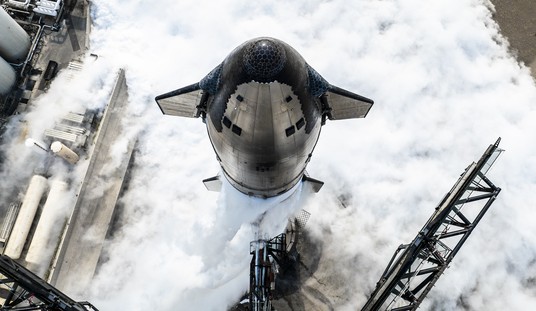
Planned for next Friday, Friday the 13th, but I’m not superstitious, even though Apollo 13 launched at 13:13 Houston time and had its explosion on April 13, after the crew said, “Okay, Houston, we’ve had a problem here,” is SpaceX’s Starship Flight 15, which, with some luck, will be the first mission ever to catch both booster and second stage for reuse.
Related: Another Day, Another World-Changing Milestone From SpaceX, SpaceX 'Failure' Makes Big Bank — $200 Million in the First Year
We've talked about this here before. In the "Failure Makes Big Bank" piece, I ran the numbers and we saw that with just a half-load of Starlink v3 and treating the whole vehicle as a NASA style expendable, SpaceX was looking to make about $200 million in profit in the first year.
Now let's look at what happens with full reuse. Still conservative assumptions, only half-load of Starlink v3.
Starship Flight 15: Dual-Catch Reuse Economics
NET 13 November 2026 · Booster 22 + Ship 42 (Block 3). Planned: 26 Starlink V3 satellites (~50 t / ~26 Tbps) and the first dual tower catch of both stages.
Assumption for these tables: both stages are successfully caught and later reused. Revenue is unchanged from the Flight 14 fleet-yield calculation. Figures are reconstructions, not SpaceX invoices.
Revenue (unchanged)
Item
Figure
Payload
26 Starlink V3s
Nameplate capacity
~26 Tbps (1 Tbps downlink each)
Fleet-yield revenue
~$490–500 million per year
5-year life, undiscounted
~$2.5 billion
Yield basis: ~$19 million per installed Tbps per year (ARK/Korus 2025 fleet average). Not 24/7 dedicated sold capacity.
Cost: Flight 14 expendable vs Flight 15 dual-catch assumption
Line
Flight 14 (expendable, as flown)
Flight 15 (caught & reused)
Super Heavy + Ship (build)
~$250M written off
Not charged in full. Amortized over future flights, or treated as recovered capital
Mission ops / range
~$5.6M
~$5–10M (longer mission, dual recovery)
Propellant
~$1.5–3.5M
~$1.5–3.5M
26 V3 satellites (~$1.2M each)
~$31M
~$31M
Early refurb / inspection (first V3 dual catch)
—
~$10–30M (tiles, engines, inspections — high early)
Cash / near-term cost of this flight
~$290M
~$50–75M
Hardware amortized (e.g. 5–10 flights)
—
+~$25–50M
All-in cost attributed to this flight
~$290M
~$75–125M
Mature dual-reuse target (Musk)
—
~$10M + satellites
Sources: Mach33 Flight 14 stack assignment (~$250M); Payload ~$90M full-stack manufacturing estimate; propellant ~$0.9–2.5M; Musk long-term ~$10M (or lower) per-flight target once both stages are caught and reflown with light refurbishment.
Comparison to the ~$500M/year payload
Flight 14 expendable
Flight 15 dual-catch assumption
Cost of the flight
~$290M
~$50–125M (depending on hardware amortization)
Years of filled revenue to cover the flight
~0.6 years
~0.1–0.25 years
Years of ~60% EBITDA to cover the flight
~1 year
a few months
5-year sat revenue vs flight cost
~8–9×
~20–50×
Notes
The big swing is simply not writing off the stack. Even a conservative early-reuse number (propellant + ops + satellites + substantial first-recovery refurb + some amortization) is still well under $150 million.
The satellites remain the largest single cash item on a successful dual-catch flight.
This is still an early recovery. Real refurbishment cost on the first V3 booster catch and first ship catch will be higher than mature airline-like numbers. The $10 million target assumes both stages are caught routinely and need little work between flights.
Payload is the same partial load (26 of a possible ~60 V3s). Filling the bay later improves the math further, but is not assumed here.
Bottom line: Same ~$500 million/year payload. The difference is that a successful dual catch turns a ~$290 million expendable ticket into something in the $50–125 million range for this flight. The satellites still dominate the remaining cost, and one year of fleet-yield revenue covers the flight many times over.
As D. D. Harriman famously said, "It’s raining soup; grab yourself a bucket."
And that's it for this week. As always, watch for new Sky Candy on Friday, and a new Sunday Supplement in a week.
Honest.
YouTube Recommendations This Week
These are a little long — more about black holes than you may have ever wanted to know. Unlike a lot of YouTube "science" videos with clickbaitish title, Matt O'Dowd is scientifically reliable and not over-excitable.