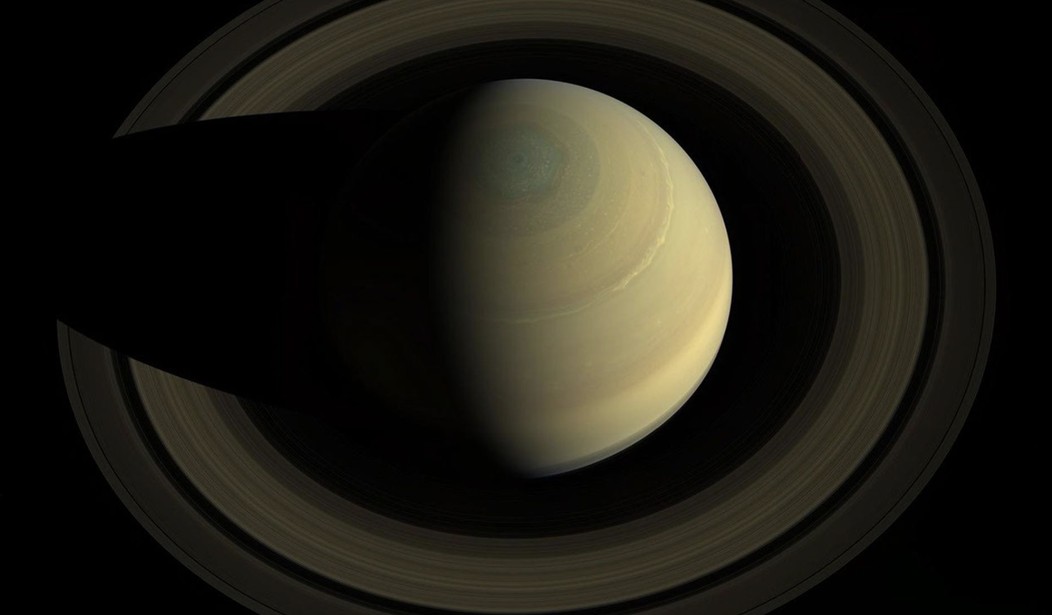

I don't think this is Schrödinger's cat. But can we be sure?
I'm starting this week with a confession. I kinda-sorta promised in Sky Candy last Friday to explain quantum computers. Now, Einstein is reputed to have said (there's some argument this is apocryphal): “If you can’t explain it to a six-year-old, you don’t understand it yourself."
I have to admit that after a week of research, I don't currently understand quantum computing that well. Now, Richard Feynman said, “I think I can safely say that nobody understands quantum mechanics.”
So I guess I shouldn't feel too bad. But I'm going to need to do some more reading before I can actually explain quantum computing. The gist of it is that a quantum computer can examine many possible solutions to a problem simultaneously in such a way that correct solutions often show up much more quickly than with conventional computers, and the answers will only rarely be wrong.
Right now, quantum computers have little practical use. Existing quantum computers can:
evaluate small quantum-mechanical problems that would be intractable with conventional computers;
generate real randomness — which is harder than it sounds, because every "random-number generator” is necessarily only mostly random. There’s a lot of truly nifty mathematics that goes into proving that, but I don’t have enough space in the margin here to state the proof;
compute a few carefully-chosen problems as long as they are matched to the particular quantum computer.
So I'll keep studying it, and I'll get back with a better explanation soon.
Related: Sky Candy Dreaming
But there are some other interesting science stories to be had this week.
Someone Ring Up Starfleet.
Okay, it's not a warp core, but it's a start. Physicists at Northwestern University and XXX trapped and stored a single positron for months, allowing experiments that will, with luck, test some of the theory underlying current quantum field theory.
Scientists trapped antimatter particle for months - but studying it without blowing up lab was a challenge https://t.co/0tMI6ICSy0 https://t.co/HaR7zlgdT1
— New York Post (@nypost) October 25, 2026
More details, and a number of other interesting stories, can be found here.
Three results this month only moved once separate capabilities were assembled rather than pursued alone. Northwestern held a single positron, the antimatter counterpart of an electron, for months near absolute zero in a Penning trap. The one positron quantum cyclotron places the particle in its quantum ground state and allows controlled jumps between cyclotron levels and spin flips. The same group previously measured the electron magnetic moment to about one part in 10 trillion. A matching positron measurement would test CPT symmetry in the lepton sector at higher precision than before. The trap, the cooling, & the nondestructive readout had to coalesce for the particle to remain controllable for months instead of annihilating on first contact with ordinary matter. At the University of Washington Institute for Protein Design, two Nature papers report proteases designed from scratch. Metalloproteases cut an Alzheimer’s linked protein more than one third of the time and 100 million times faster than the uncatalyzed reaction. Cysteine proteases reached up to 30 million times faster. Designs also targeted TDP 43 and serum amyloid A. Success required the design models, crystal structures confirming the folds, and validation across groups at Oxford, ETH Zurich, Lawrence Berkeley, Stanford, Max Planck, & Cambridge. Single components did not produce sequence specific cuts at those rates. UCLA & UC Berkeley published higher resolution images of telomerase in Science. The work captures the enzyme’s catalytic core and shows it actively adding DNA. Two previously unrecognized proteins, Teb2 and Teb3, increase activity. Each mapped interaction is now a potential precise target, either to inhibit the enzyme in cancer cells or to understand failure modes in short telomere disorders. Structural methods and functional assays had to be combined to turn the image into a usable map. The pattern is the same across the three. Precision instrumentation alone did not yield the controlled positron. Design models alone did not yield the working proteases. Imaging alone did not yield the telomerase interaction map. The results appeared when the complementary pieces were brought together. Open items remain on this Science Sunday. The positron comparison is still ahead. The designed proteases have not yet been tested for selectivity inside complex tissue. Telomerase targeting still requires compounds that hit the new sites without broad toxicity. For All Humanity
— Ξl Boyd (@MrElBoyd) October 25, 2026
Related: Why the Midterm Polling Is Absolutely, Positively, 100% Wrong. (Maybe.)
Medicine
Pancreatic cancer is notoriously difficult to treat because its cells can constantly adapt, spread rapidly, and outsmart therapy. A new study published in Nature Genetics by researchers at NYU Langone Health and UC San Diego Health has uncovered how these tumors rewrite their own DNA to survive, while revealing a potential way to reverse their deadliest behavior. By analyzing nearly half a million individual cells from 62 human tumors, scientists discovered that a pancreatic tumor is not a uniform mass. Instead, it is an evolving ecosystem containing up to 11 distinct sub-families of cancer cells living side by side. As these cell groups alter their genetic code over time, some develop resistance to chemotherapy while others gain the ability to spread to surrounding tissues. The team pinpointed a specific gene called MYC as the main switch behind this dangerous evolution. When cancer cells acquire extra copies of the MYC gene, they shift from a slower-growing form into a highly aggressive state and simultaneously cloak themselves from the body's immune system. Crucially, this transformation is not permanent. When researchers blocked the MYC gene in laboratory models, the aggressive cancer cells reverted to their slower, more manageable state and became visible to immune cells again. The team also found that these tumors rely on a protein called TIGIT to evade immune detection, explaining why standard immunotherapies often fail against pancreatic cancer and pointing toward promising new combination treatments. Paper details: Kalfakakou, D., Cameron, D.C., Kawaler, E.A. et al. Clonal heterogeneity in human pancreatic ductal adenocarcinoma and its impact on tumor progression. Nature Genetics (2026). DOI: 10.1038/s41588-026-02779-5
— Science & Nature (@ScienceIsNew) October 25, 2026
I recently lost a friend to pancreatic cancer, so this is interesting.
France records first known human case of Shamonda virus First human Shamonda infection reported, in France https://t.co/Xeft82I77Y
— Shared Sapience (@SharedSapience) October 24, 2026
In France, the first human case of Shamonda virus has been reported. Shamonda is an animal virus that originated in Africa and has spread pretty widely, including to Europe in recent years. Now, before we start another “OMG a virus” furor, Shamonda is normally transmitted only from animal to animal, usually in cattle but also in horses, sheep, goats, and alpacas. In animals, it mainly causes illness, with fever, diarrhea, reduced activity, and decreased milk production. The one human case was a man who was already being treated for leukemia, and leukemia treatment severely suppresses the immune system. He developed neurological symptoms before dying, and the virus was detected in a post-mortem examination.
This is primarily interesting because it’s unusual: it’s the only known case. But I wanted to bring it up because I’ve already seen a few people on X trying to stoke panic, saying it’s another mystery disease like AIDS, COVID, or monkeypox. It's not. Anyone saying it's the start of another pandemic is selling something.
Related: In 1960, Some Scientists Predicted the End of the World Would Happen on Nov. 13, 2026. This may affect your Thanksgiving planning.
YouTube Science
The Nancy Grace Roman Space Telescope is getting closer to doing actual science.
Roman is now fully functional. NASA says the telescope has entered its final phase before science, called science commissioning. Senior project scientist Julie McEnery put it simply. It can guide, take exposures, move data and slew between targets. Now the team is chasing the fine details of image quality. What is already done: • All 18 Wide Field Instrument detectors checked out • The telescope focused into its best position • Optics error of just 63 nanometers RMS, against a 90 nanometer requirement • Performance nearly 30 percent better than predicted 63 nanometers is about a thousand times thinner than a human hair. One worry also went away. The team feared guidance might struggle in crowded star fields and dusty nebulae. Test observations showed Roman handles them well. The coronagraph is still calibrating its deformable mirrors before a light blocking demo in the coming weeks. The Wide Field Instrument covers a field about 100 times larger than Hubble's main camera. First science images are expected by early 2027. The checks are almost over. The universe is next.
— Kisalay (@Kisalay_) October 23, 2026
This is a repeat from Sky Candy this week, but false color has been a topic recently; this shows how false color is used to visualize information,
@NASAAmes @NASAHubble The colors behind this cosmic view👀 https://t.co/4ypZ5nTAG5
— Meditations in Color (@MeditateColor) October 21, 2026
This week, Dr Becky explains more about the recent Nobel Prize awarded for work on the IceCube Neutrino Observatory. In particular, she explains why Francis Halzen was the sole winner of this year's Nobel Prize in Physics. I wondered about that myself. She also complains about how Starlink is messing up dark skies for astronomers. The solution, of course, is to move astronomy to the Moon, as God and Arthur C. Clarke intended.
And let's end up with a video that's more manufacturing than pure science, but it explains another bit of how Elon Musk is making the 21st century we were promised.
And that's the week. Come back next Friday for Sky Candy, and next Sunday for the next Sunday Supplement.