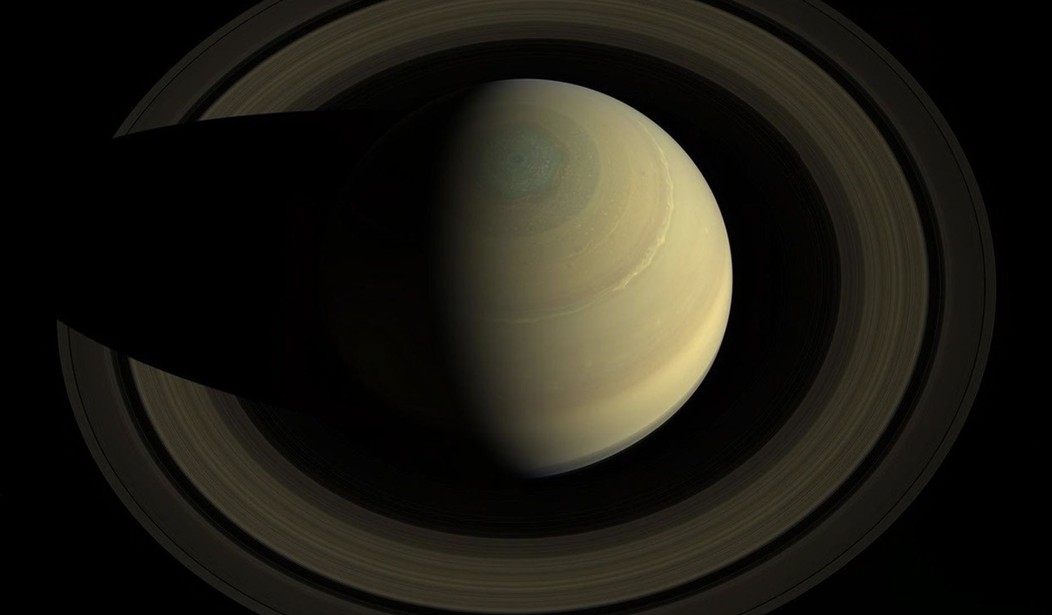
I'm in a jazz mood today.
It Spins
The Vera C. Rubin Observatory in Chile has only recently begun delivering data from its large sky survey. The first peer-reviewed paper was recently published,
Astronomers analyzing data from NSF–DOE Vera C. Rubin Observatory, jointly funded by the U.S. National Science Foundation and the U.S. Department of Energy's Office of Science, have discovered the fastest-ever spinning asteroid with a diameter over half a kilometer — a feat uniquely enabled by Rubin.
Well, okay, January is pretty recent. But it has drawn some attention recently in YouTube videos saying "astronomers are terrified" — don't bother searching for that phrase, you'll discover astronomers can be terrified by things hundreds of light-years from Earth that might happen in the next 10,000 years. Apparently YouTube thinks "terrified" is good advertising. But this is at least interesting, but not all that scary. The real story is that Rubin has identified a really unexpected asteroid — one about 710 meters across (about a half mile) that is spinning really fast — about 2 RPM.
The common idea of what asteroids are like comes from the few asteroids probes have contacted, and they have all been basically loose piles of gravel. They rotated, but relatively slowly. The gravel piles are limited by centrifugal force — the faster they rotate, the more centrifugal force is fighting against the pitiful gravity holding them together. That means a rubble pile a half-mile across that rotated more than once in about 2.2 hours would fall apart.
This one, 2025 MN45, is going something like 70 times faster than that.
Rubin identified 2,100 new asteroids in nine nights of test images and obtained rotation measurements for 76 of them. Of those, 19 are turning faster than that 2.2-hour limit, and 2025 MN45 holds the record.
Also read: Restful Sky Candy
The obvious conclusion is that these fast-rotating asteroids are solid. A big chunk of rock, or even metal from the core of a planetesimal that was big enough to differentiate before being broken up by another asteroid cue ball in the Belt's cosmic pinball game.
Right now, it's just interesting. But it might make a mining claim in a few years. Might be exciting — the centrifugal force at the surface would be about 0.1 gee. Mining it might be more like dangling from a trapeze.
It's Full Of Stars Galaxies
Andrew McCarthy has gotten a really interesting long, long exposure.
After capturing over 100 hours worth of exposures, I'm pleased to share my latest "Deep Field" image, containing THOUSANDS of galaxies and a brand-new supernova that just kicked off ~2 weeks ago!
— Andrew McCarthy (@AJamesMcCarthy) September 17, 2026
Timelapse showing the supernova, prints, and more details in the thread 👇 pic.twitter.com/RptuuTrxKy
He's also published a video about taking the images.
Here’s a video about capturing a brand new supernova and thousands of galaxies in one shot.
— Andrew McCarthy (@AJamesMcCarthy) September 19, 2026
The comparison to the last time I captured this area is crazy 😵💫
Prints available linked in my bio for just two more days. pic.twitter.com/yvGsyrkTHM
There's Life There?
So there's one other thing that caught my attention this week: There have been a number of observations of life in unexpected places.
Most recently the folks at Linnaeus University in Sweden drilled a borehole more than 2,300 meters into the rocks of the "Caledonian Belt" — the mountains that formed about 450 million years ago and eventually became Scotland, Ireland, Scandinavia, Greenland, and the Appalachians in North America. They found evidence of methane-generating microbes at the bottom of the hole, starting about 380 million years ago and continuing off and on until about 2 million years ago.
Related: NASA Could Have Already Discovered Life on Mars, and We'd Never Know It
This was new and interesting but not real surprising. In 2016, researchers found microbes living 2500 meters down in the Appalachians. Others have shown up as much as 5 km down.
The point is that no matter where we look, as a rule of thumb, if there's liquid water, there is Life.
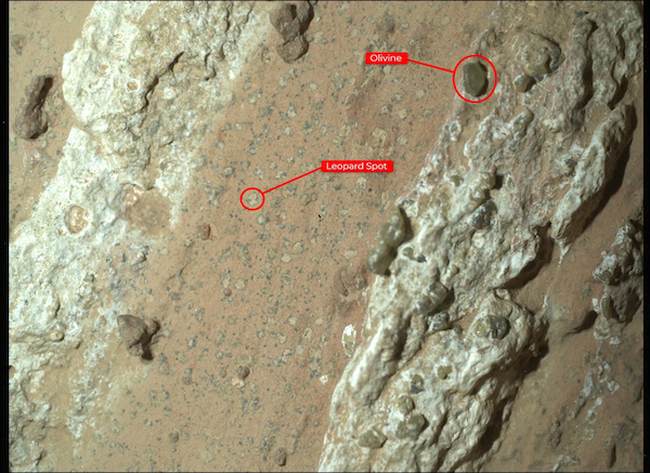
Which brings up some pictures from the NASA Perseverance rover. In 2024, while crawling along a dry riverbed in Jezero Crater (I keep wanting to read that as G0, but I'm told it's actually a Croatian name for a lake in Croatia, pronounced ye-ZER-oh), the rover found ... something. It looks a lot like the dried-up remains of life. NASA has called it a "potential biosignature." Then, this June, the SHERLOC experiment found big organic — that is, carbon — molecules. If we saw these on Earth, we'd automatically think "life." There was liquid water there once.
On Mars, it's not so clear.
The only way to settle it is to actually get samples into a lab. Perseverance has stashed samples, but right now the sample-return mission has lost its funding. Maybe the funding will be restored. Or maybe SpaceX will bring them back.