


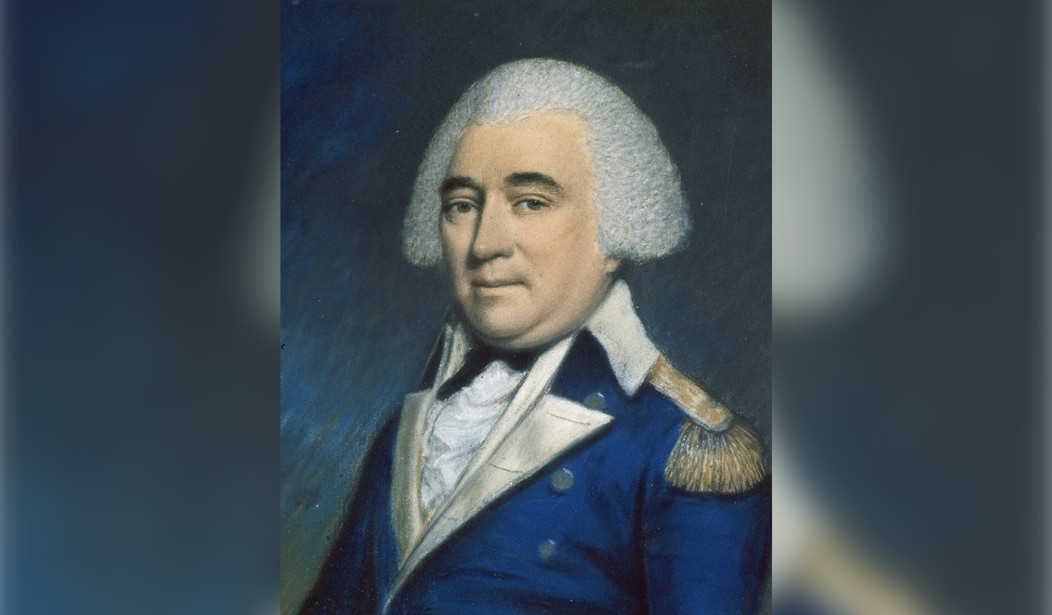
On Aug. 20, 1794, “Mad Anthony” Wayne proved he was still the hero of the American Revolution and capable of ending a threat from hostile native tribes that had confounded many another American officer in the nascent days of our Republic.
When George Washington became the first president of the United States, he and his small cabinet and administration not only had to set the precedent for numerous vital federal actions but also deal with hostility from the British and from some native tribes. While Washington made an effort to establish peace with as many native chiefs as he could, American pioneer expansion and wilderness taming necessarily sparked conflicts.
In March 1792, Congress approved the reorganization of the U.S. Army as the Legion of the United States, according to The Army Historical Foundation. President Washington and Secretary of War Henry Knox turned to an old comrade of the Revolution to lead the Legion: Anthony Wayne. Adopting some of the methods that Baron von Steuben had used to train the colonial Army, Wayne drilled and trained and instructed his recruits, determined to avoid fighting native warriors with as little success as previous officers and raw recruits had experienced.
During this time, Wayne experienced the personal tragedy of his wife’s death. And during the opening scouting period of the Legion’s foray into the wilderness, they came upon the skeletons of the men whom native warriors had massacred from Arthur St. Clair’s troops in 1791. It was a sobering reminder of what awaited them if they could not hold their ground.
Related: America 250: U.S. Patriots Seek Vital Ingredient From Spanish Governor
Shawnee Chief Blue Jacket planned to ambush Wayne and the Legion troops in a place where a tornado had knocked down trees in the area where Toledo is now. Fallen Timbers was more favorable for defenders than for attackers, who wouldn’t have a clear firing line. But The Army Historical Foundation noted that Wayne’s scouts were good enough that the ambush plan didn’t work.
On the morning of 20 August, the Legion approached Falling Timbers. Wayne divided his infantry into two wings, the right commanded by BG James Wilkinson, the other by COL John Hamtramck. A brigade of mounted Kentuckians guarded the open left flank, while the Legion’s cavalry secured the right along the Maumee. Scott’s remaining forces formed a reserve.
The vanguard of the Legion came under fire around 0900. After some initial confusion, Wilkinson regained control of the situation. Wayne then rode forward, his eyes flashing. He correctly determined the strength of the enemy and their positions, and quickly saw that mounted troops would be largely ineffective on the battlefield. Under fire and in intense pain from gout, he immediately ordered his infantry to charge with bayonets to flush the Indians out of their positions, where they could be cut down by musket fire. Unused to a well disciplined enemy, the Indians, who expected to be the ones charging, broke and ran towards Fort Miamis. The Indians fled so fast that mounted troops on the flanks had difficulty catching them. Nonetheless, dragoons from the Legion charged headlong at the log barriers like jockeys at a steeplechase, cutting down the Indian warriors with their sabers. The dragoons’ charge completed the rout.
The Battle of Fallen Timbers lasted for less than an hour, and fewer than 40 of Wayne’s men died. Wayne followed up his advantage by destroying crops in the area and the British would not let the fleeing natives into their fort. Only a few months later, the British were agreeing to withdraw from the area and the natives were agreeing to let Americans settle in Ohio. Anthony Wayne and his troops had won the war.
For more on Anthony Wayne, read my previous article: ‘Determined to Be Free’: Mad Anthony Wayne Captures an 'Impregnable' Fort in 1779
Editor's Note: President Trump is fighting to renew America this 250th birthday year.
Help us fight back against anti-American propaganda and historical lies. Join PJ Media VIP and use promo code FIGHT to receive 60% off your membership.







Join the conversation as a VIP Member