


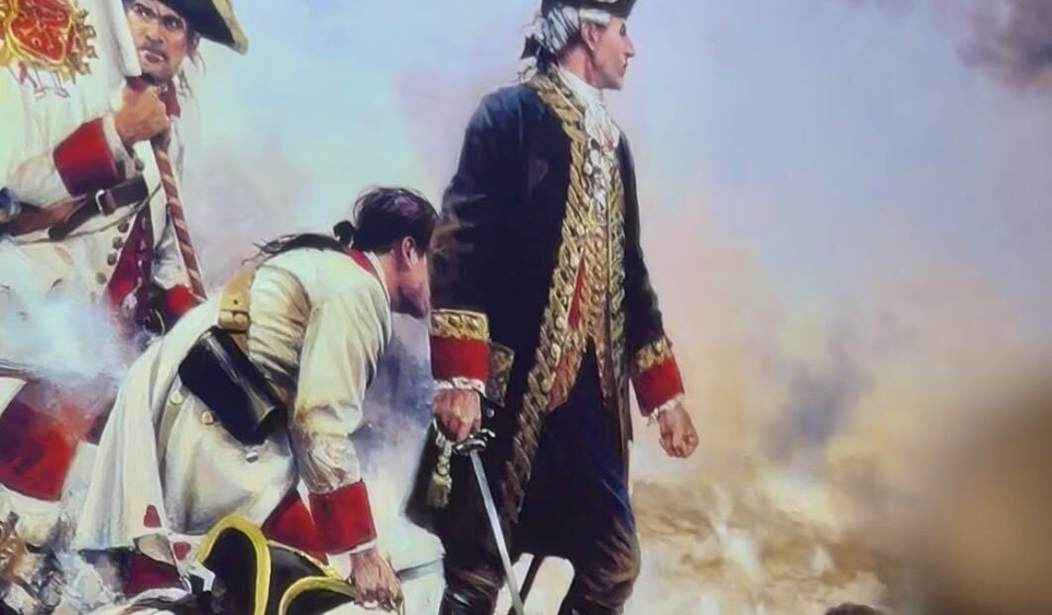
On Aug. 15, 1776, exactly 250 years ago, a group of Virginia militia reached New Orleans, which at that time was under the control of Spain. The Americans were searching most specifically for a vital ingredient in order to continue their revolution against Great Britain, and I’m not talking about money.
Most Americans have forgotten that while Spain did not play quite as big a role militarily in helping the American revolutionaries as France did, Spanish aid was still very important. In fact, the Spanish supplied so much money and other necessaries that our American currency is called the dollar after the Spanish word commonly in use for currency at the time. When the American Revolution began, colonists had spent years depending upon England for currency and overseas supplies. Suddenly they found that they needed some other source. So they turned to Britain’s two greatest rivals in the New World, the Spanish and the French.
In 1776, the Patriot revolutionaries particularly needed gunpowder, and they didn’t really have a way of manufacturing it effectively in sufficient quantities. They would find allies in Louisiana’s Spanish governors Luis de Unzaga y Amezaga and Bernardo Vicente Apolinar de Gálvez y Madrid. The Spaniards had fought Great Britain, they hated the British, and de Gálvez in particular was to become a crucial player in facilitating maritime and overland trade to boost the American cause.
In fact, New Orleans would help those ships bypassing the British blockade to reach a port and deliver their cargo, which de Gálvez would send up the Mississippi and Ohio Rivers to the Americans. And when Americans conducted raids along the Mississippi, they found a market for their captured goods in New Orleans. De Gálvez would later lead troops into battle to capture British forts, including at Pensacola, on behalf of the Americans.
For Our VIPs: Sons of Liberty, a 1765 Protest, and Not Giving Up Hope
It all began with that initial 1776 trip for gunpowder, at which time Luis de Unzaga y Amezaga was still governor of the territory. Although named after a French city and most associated now with the French influence, New Orleans was under Spanish control for the latter half of the 18th century. Like many other locations in the New World, it changed hands multiple times. Fortunately for the Virginia militia, the Spanish were quite happy to provide certain supplies and cash in order to weaken British influence in the New World. As mentioned above, they would also eventually commit some soldiers and sailors to the war effort, too.
The Northern Virginia Sun ran a series of pieces for America's bicentennial in 1976, 50 years ago, that included information about the gunpowder mission in August 1776. Below is a passage taken from a 1976 article, which referenced another column titled "500 pounds of gunpowder," and which honored Virginia officers for their mission to the Spanish (formatting errors are from the original):
On May 12, 1776, the Virginia Committee of Safety dispatched two officers, Captain George Gibson and Lieutenant Linn, to New Orleans to seek new supplies of gunpowder essential to the colony's defense. The two Virginians, assuming the guise of traders, journeyed down the Ohio and Mississippi from Fort Pitt to New Orleans. With the invaluable assistance of Oliver Eollock, a New Orleans'' businessman, they were successful in persuading the Spanish Governor, Luis de Unzaga y Amezaga, to make the secret sale of gunpowder to Virginia. Linn took three-fourths of the gunpowder- up the river, getting it to Forts Pitt and Wheeling just in time to save those outposts from the British and their Indian allies. To mask the effort and to convince the British that Spain was not violating its neutrality, Captain Gibson permitted himself to be arrested. He was then released quietly and sailed for Philadelphia with the remaining gunpowder and other needed supplies-- muskets, blankets and medicine:' The gunpowder with which Clark first outfitted his men was part of the twelve thousand pounds of gunpowder (!) obtained by Gibson and Linn from the Spanish King's Stores in New Orleans. Later, as Clark continued his military successes in the west, he .continued to depend on the secret aid of Spain.
That's where de Gálvez, the Spanish soldier and politician I mentioned earlier, came in. He made such an impression of gratitude on the minds of southern Americans that there is a Texas city that still bears his name, and Pensacola has a Galvez Day. The Northern Virginia Sun explained:
Bernardo de Galvez... for whom Galveston, Texas, is named ...provided not only the needed military supplies, but the finances and credit needed to fund., [sic] the Commissary Department and pay the troops. de Galvez provided large sums from his "very secret service money" and loaned even more from the Spanish Treasury, and has been credited with enabling the Americans to retain control of the territory north of the Ohio. He even allowed the Americans to fly the Spanish flag on supply ships to protect them from shelling by English shore batteries. And, when Spain entered the war on the side of the Americans on June 21, 1779, it was Galvez, with Oliver Pollock riding at his side, who captured Baton Rouge, Natchez, Mobile and Pensacola from the British.
So in this America 250 year, don't forget to honor the Americans who coordinated vitally important alliances — and the allies who made the Revolution's ultimate victory possible.
Editor's Note: President Trump is fighting to renew America this 250th birthday year.
Help us fight back against anti-American propaganda and renew a love for U.S. history. Join PJ Media VIP and use promo code FIGHT to receive 60% off your membership.



Join the conversation as a VIP Member