Three branches of America’s military — Army, Navy, and Marine Corps — will celebrate 251 years in 2026, while our nation itself is rapidly approaching its 250th birthday. And today, this Memorial Day Monday, we honor all those who gave the last full measure of devotion to found, build, and preserve America, because freedom isn’t free.
On this Memorial Day, I would like to share just a few stories about some of our greatest commanders and their men over the centuries. While some of the individuals named in the stories below survived their wars, they all fought alongside men who died, and their daring, patriotic, and determined words echoed the spirit of the soldiers, sailors, airmen, and Marines who never came home as much as of those who did. So as you read the stories below, remember that every great U.S. victory has come at the cost of American lives.
At Trenton, in January 1777, George Washington rode straight to the front line and faced the British soldiers who kept charging across the snowy bridge at his footsore troops. Around 40 Americans died or suffered injuries that day, but they wouldn't back down in the face of a numerically superior enemy force. "Defend the bridge to the last extremity!” Washington urged his men. One officer promptly replied, “To the last man, Excellency."
On Sept. 23, 1779, the American ship Bonhomme Richard was burning, with its bows having run into the stern of the British ship Serapis. The Americans were in a bad case, and the Serapis hailed them, “Has your ship struck?” U.S. Captain John Paul Jones roared back, “I have not yet begun to fight.” He lost his ship but captured the British ship.
Read Also: Reagan’s Memorial Day Tribute and Challenge Rings True in Our Day Too
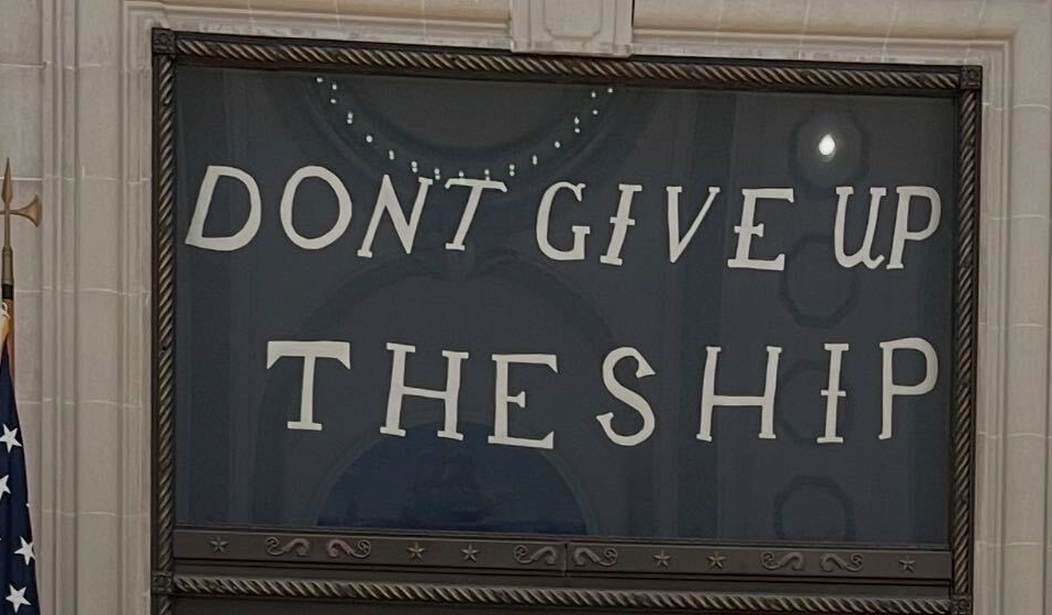
In June 1813, during the War of 1812, Captain James Lawrence was dying on the USS Chesapeake, which was battling the British HMS Shannon. That battle would take the lives of 146 U.S. sailors. But before Lawrence expired, he issued his last order to his men: "Don't give up the ship." While the British captured the Chesapeake, Lawrence's friend Oliver Hazard Perry sailed on Lake Erie in a ship named after Lawrence with his banner flying the words, "Don't give up the ship." When Perry received the British surrender, he did it on the USS Lawrence.
It was summer 1863, and Union Gen. U.S. Grant was reading a message from Gen. Henry Halleck. Grant had already gone beyond what the order allowed him, and he knew his men must violate it further if they were to break the siege of Vicksburg and win a critical victory for the Union. Over 760 Union troops would die taking Vicksburg, but Grant was sure he would win. Hearing a rousing cheer from where brigadier Michael Lawler was leading a charge, Grant didn't argue with the overwrought messenger. He stuck Halleck's message in his pocket, rode off, and continued to oversee what would be a resoundingly successful battle plan.
In August 1864, Union Admiral David Farragut was lashed to the rigging of the USS Hartford as he and his fleet faced the Confederate port of Mobile Bay. The Confederates had rigged the port with mines, and the USS Tecumseh struck a torpedo and sank. Farragut's fleet wanted to retreat, but the admiral refused. "Damn the torpedoes! Full speed ahead!" he roared. Over 150 Union troops died in the battle, but they ensured a crucial maritime victory.
Army First Sgt. Milo Lemert was in France in 1918 when enemy fire stalled his company's advance. Lemert single-handedly eliminated three enemy machine-gun emplacements before the fourth emplacement's crew killed him.
It was 1942 amid the hell of Guadalcanal. Marine Sgt. John Basilone single-handedly held off a Japanese charge and survived an attack from his rear, when he eliminated multiple enemy soldiers with his pistol. He repeatedly charged through enemy lines and continued to fire his machine gun even after the heat from the barrel blistered his hands. Basilone received the Medal of Honor and the reward of a war bond tour in the USA, but he wanted to return to combat. Offered a cushy assignment in D.C., Basilone answered, "I ain’t no officer, and I ain’t no museum piece. I belong back with my outfit." Just after guiding a tank to safety on Iwo Jima, Basilone received a mortal injury.
Naval Hospital Corpsman Third Class Edward Benfold was fighting in Korea in 1952 and was treating wounded comrades when the enemy threw two grenades into a crater where Marines were, even as two enemy soldiers charged. Benfold picked up a grenade in each hand and hurled himself on top of the enemy soldiers, killing them. Benfold didn't survive, but the Marines did.
Near Phu Muu II in December 1966, Army Private First Class Lewis Albanese realized the Communist Vietnamese were endangering his comrades from their left flank. Fixing his bayonet, Albanese advanced into the entrenched enemy position, shooting six snipers. Having exhausted his ammunition, he then killed two more foes in hand-to-hand combat before receiving a mortal injury.
Related: Red, White, and Israeli Blue: A Memorial Day Tribute From Our Best Ally
In 2004, Corporal Jason Dunham and his Marines stopped several vehicles near Iraq's border with Syria so they could search for weapons.
[We Are the Mighty] As he approached one of the vehicles, the driver lunged at Dunham’s throat and they fought in a hand-to-hand battle. Wrestling on the ground, Dunham then yelled to his Marines, “No, no watch his hand.”
The insurgent then dropped a grenade with the pin pulled. Dunham jumped on top of it, placing his helmet between his body and the grenade in an effort to brunt the explosion.
“He knew what he was doing,” Lance Cpl. Jason A. Sanders, who was in Dunham’s company, told Marine Corps News. “He wanted to save Marines’ lives from that grenade.”
Dunham died, but two Marines lived because of his sacrifice.
And most recently, in March 2026, 13 Americans died during Operation Epic Fury against Iran, including members of the Army, Air Force, Air National Guard, and Army Reserve. Freedom is never free.