


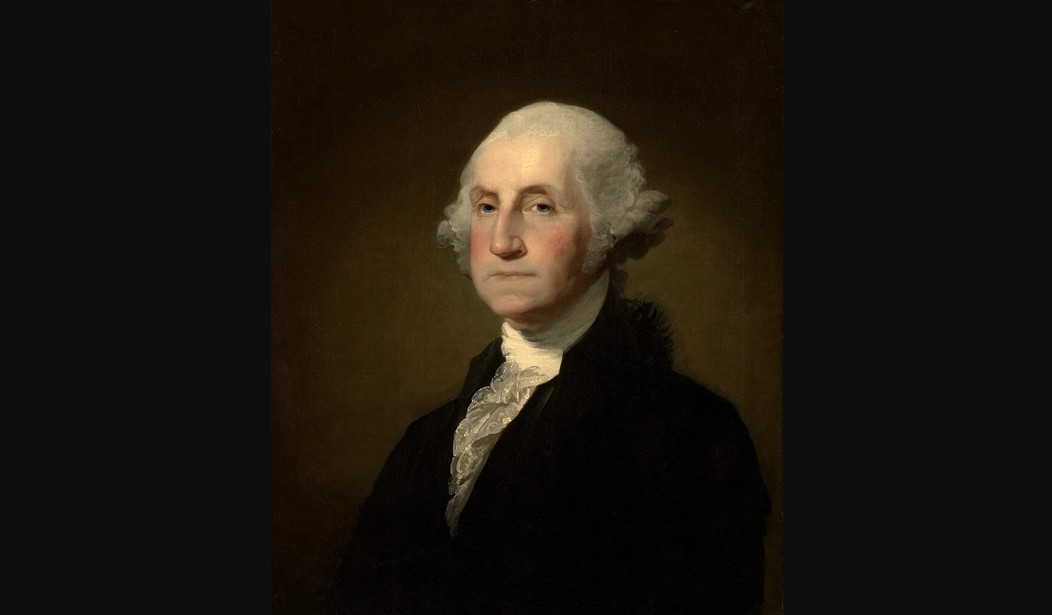
On April 30, 1789, George Washington took his oath of office as the first president of the United States. The "indispensable man" of our Revolution was once again responding to his nation's call, despite his desire to retire from public life. And his inaugural address has many lessons for us still today.
Washington was among multiple Founding Fathers who argued that our great Constitution and the Republic founded upon it could survive only so long as Americans were overall a moral and religious people. Without the principles of Judeo-Christian religion, they foresaw that liberty would not thrive. Unfortunately, we are living the crisis they warned against. Without moral excellence, freedom becomes license, government becomes tyranny, and society becomes chaotic and crime-plagued.
The 1789 Washington inaugural speech is well worth reading in full, of course, but for the purposes of this article I want to focus on one passage in particular:
[T]here is no truth more thoroughly established than that there exists in the economy and course of nature an indissoluble union between virtue and happiness; between duty and advantage; between the genuine maxims of an honest and magnanimous policy and the solid rewards of public prosperity and felicity; since we ought to be no less persuaded that the propitious smiles of Heaven can never be expected on a nation that disregards the eternal rules of order and right which Heaven itself has ordained; and since the preservation of the sacred fire of liberty and the destiny of the republican model of government are justly considered, perhaps, as deeply, as finally, staked on the experiment entrusted to the hands of the American people.
Washington was remarkable in being one of those men who actually practices what he preaches. Like any human being, he had his flaws and his occasional moral failures, but he is exceptional in history for being not only a great man but a truly good man, two lauds which do not often go together, at least for political leaders. As a husband, a foster-father, a soldier, a farmer, a general, a president, and yes, even as a slaveowner (who alone among the primary Founders freed his slaves), Washington was habitually a man of great honesty and integrity.
Read Also: 'National Honor' and Civil Rights: Lessons From U.S. Grant's First Inaugural Address
That's where he was so very different from politicians of today. I cannot think of a single major politician of either party now who consistently acts on a set of well-defined moral principles. But to a certain extent we have the politicians we deserve. Most Americans now are to a greater or lesser degree selfish, entitled, and too easily led into poor decisions by emotional manipulation. We ought to be better. We have the greatest nation in the world. Why not live up to its founding ideals?
Many are the moral evils that are endemic in America now, including domestic terrorism, abortion, sexual perversion, broken families, pro-crime policies, assassination fervor, riots, institutionalized theft (e.g., welfare), and victimhood mentalities. America is in moral crisis.
But probably most if not all PJ Media readers know this already. What we all want are solutions. Fortunately, we can look to the past for inspiration. Washington warned us that "the propitious smiles of Heaven can never be expected on a nation that disregards the eternal rules of order and right" and that there is "an indissoluble union between virtue and happiness." If we would preserve the "sacred fire of liberty," we need to dedicate ourselves to personal integrity and cultural renewal.