February 26 is the anniversary of two events interesting to those Americans wanting to study the Revolution and the founding of our country, especially in this 250th anniversary year of America’s existence. On this date in 1813, an important but largely forgotten Founding Father — Robert R. Livingston — died, and on this same date in 1839, a woman who earned her place in history by a Paul Revere-like ride to thwart the British also passed away.
Sybil Ludington Ogden is regaining popularity in our day amid a reawakened conservative interest in history and an effort to discover some of the lesser known patriots who contributed to ultimate victory and independence. My colleague Dave Manney has written about Sybil also. Often referred to as the "female Paul Revere," she has a fascinating story in her own right, one which I first learned when I visited her home town of Danbury, Connecticut, where there is a statue monument of her.
On April 25, 1777, some 2,000 British troops landed near Fairfield, Connecticut, let by former New York governor William Tryon, according to historian Tara Ross. The British troops marched to Danbury, where they destroyed supplies for the American Army and torched homes, a favorite British war crime during the Revolution. Many of the British soldiers got drunk, which caused the property destruction to get more and more egregious. Obviously, this was a crisis that needed a military response.
Patriots in Danbury sent messengers to American commanders who were relatively nearby, including Col. Henry Ludington, a militia officer who had a problem — his troops had disbanded because they were farmers and it was planting season. Sixteen-year-old Sybil, his daughter, agreed to ride and warn as many men as possible to muster at Ludington's house. Some worried about the "rugged and dangerous roads, with lonely stretches," and that in the pitch-black of night, but Ludington's daughter was not deterred by any danger or obstacle. Mounted on a man's saddle, with a hemp halter to direct her horse, Sybil rode hard through the night with the news of the destruction of Danbury. By daybreak, most of Col. Ludington's regiment was gathered at his house, warned by the colonel's fearless daughter and ready for a fight.
Robert R. Livingston, who shared a death date with Sybil — though more than 20 years apart — had a very different but also very important role in the American Revolution. The Gotham Center for New York City History states that Livingston was distinguished for his more than two decades as the first chancellor or highest-ranking judge of the state of New York, starting in 1777. Livingston also helped negotiate the Louisiana Purchase from France, which doubled the size of the U.S., while he was minister to France. But perhaps his greatest legacy was helping draft the Declaration of Independence.
Read Also: The Marines Who Raised the Flag on Iwo Jima 81 Years Ago
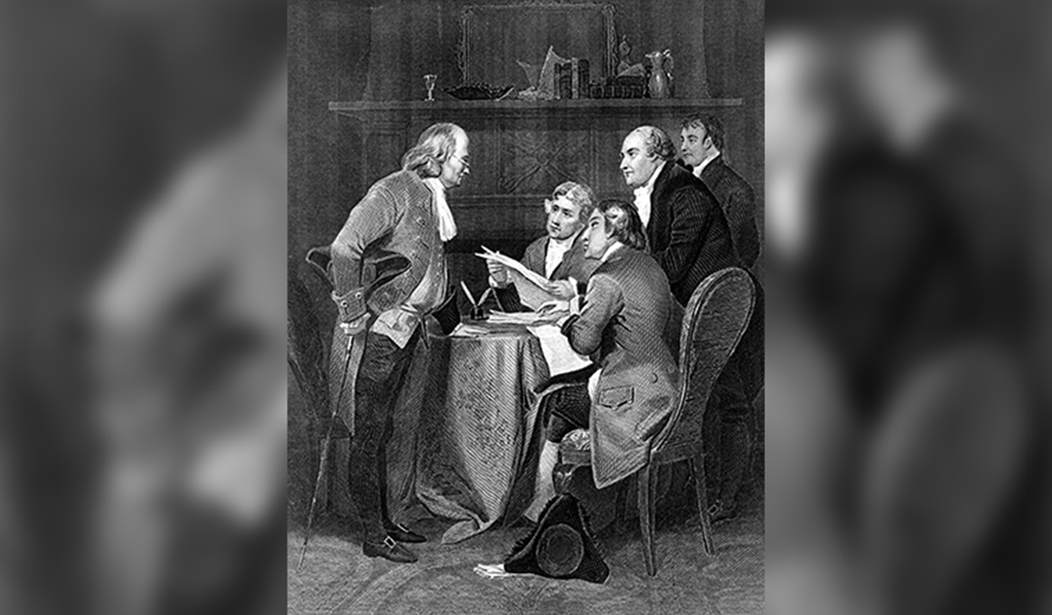
The Gotham Center notes that fairly recently, scholars uncovered a document draft indicating that Livingston was one of the early and faithful pushers of independence in the Second Continental Congress, where he was chief New York delegate. This helps illuminate his appointment to the Committee of Five, pictured above, which was to draft the Declaration of Independence in 1776. While Thomas Jefferson is considered the main author of that immortal document, all the members of the Committee contributed to it.
Livingston held multiple offices including secretary of foreign affairs and a New York representative for the convention to ratify the U.S. Constitution. As New York chancellor, Livingston administered the oath of office to our first president George Washington, as New York City was the temporary capital.
As we approach America's 250th birthday, we should remember and honor all the men and women who helped to found our great nation.