


Today is the Tuesday before Lent begins, as tomorrow (Feb. 18) is Ash Wednesday 2026. While the beginning of Lent changes dates from year to year, one constant for many centuries was the traditions both of spiritual cleansing and lavish celebrations on what is variously called Shrove Tuesday, Mardi Gras, Pancake Tuesday, or Carnevale.
If you are wondering about Pancake Tuesday, that is what the Irish call the day before Ash Wednesday, referring to the fact that the Irish traditionally made pancakes if they could afford to because eggs, milk, and butter are among the eatables Catholics traditionally could not eat during Lent. But since the Catholic Church also did not allow weddings during Lent, since it is a penitential season, the Irish had semi-romantic traditions associated with Pancake Tuesday also, as RTE explains:
What became known as Skellig Night was a feature of Shrove Tuesday in parts of the south, especially Cork and Kerry. After sunset, noisy crowds went onto the streets of towns in the region and the Skellig night procession was all about loudly slagging off the still-single and telling them to "go to the Skelligs". The Skellig islands off the coast of Co. Kerry were said to still run under the old calendar, therefore Ash Wednesday would arrive later there, hence there would be still time for the single to go there to marry before Lent began. Sometimes, people in disguise would call to the homes of the single and try to take them by force onto the street to be jeered, making as much of a din as possible.
And I thought it was hard being single in modern America!!
Read Also: ‘Words Mean Things’: Rush Limbaugh’s Lesson on the Importance of Definitions
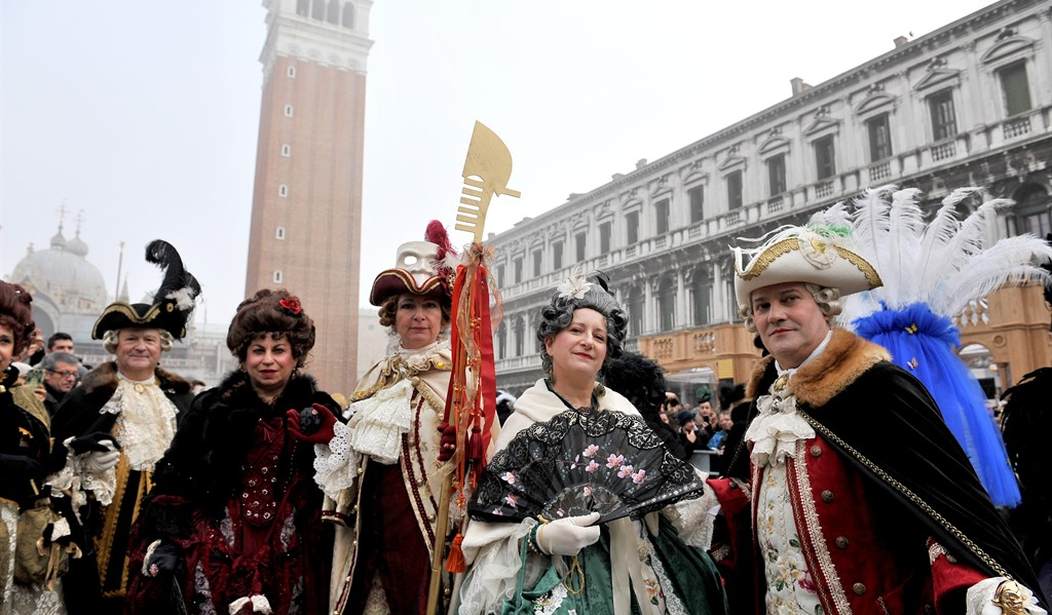
Carnevale in Italy can also be very rowdy, but there is usually less of an emphasis on shaming single people and more of an emphasis on dressing up and enjoying food and drink. The most famous such celebration is in Venice, as Venice Insight explains:
The origins of Carnevale date back to the 12th century, with its heyday in the 18th century when Venice was a cultural and political hub of Europe.
The word “Carnevale” comes from the Latin “carne levare,” meaning “to remove meat,” referencing the traditional fasting period of Lent. Carnevale was a time to indulge in lavish feasts, entertainment, and celebrations before the somber season of abstinence…Masks are the most iconic symbol of Carnevale. They were traditionally worn to hide identities, allowing people from all walks of life to mingle freely without societal restrictions. Masks created a sense of equality and mystery, which added to the allure of the festivities.
In 2020, just before the COVID-19 lockdowns hit, I was fortunate enough to be in Italy for Carnival. I was not in the Italian city most famous for its pre-Lenten celebration, Venice, but in a less spectacular way all of the Italian cities also celebrate the Tuesday before Ash Wednesday. I was in Siena, where a sort of mini medieval-style fair was going on in the famous Piazza del Campo, still surrounded by medieval buildings and rich in both political and religious history. There was a fire-eater and acrobats and crowds of children wearing costumes, playing games, and enjoying sweets. I have often thought since how much fun it would be if Americans across the country, not just in Louisiana, also celebrated a form of Carnival.
Speaking of Louisiana, most Americans associate Mardi Gras or Fat Tuesday with that state, but of course, the parades, costume balls, and crêpes and beignets all have their roots in centuries-old French traditions, as Louisiana was a French possession.
Among the famous Mardi Gras celebrations, according to The French Focus, are the Carnaval de Nice with the batailles de fleurs (battles of flowers) where performers throw fresh flowers into the crowd, the Carnaval de Toulouse with its street performances, and the Carnaval de Dunkerque where people toss smoked fish down from the town hall’s balcony.
Finally, in England the day before Ash Wednesday was less a celebration and more a preliminarily penitential preparation. Like the Irish, the English used to make pancakes, but in the time when England was Catholic, it was also a date for attending the sacrament of Confession to receive absolution from sin (e.g., James 5:16). Chiltern Open Air Museum says:
Shrove Tuesday therefore became a day of spiritual preparation. Parishioners would attend church, confess their sins and settle disputes before entering the more reflective season of Lent.
Whether you attend a carnival-style party or focus on prayer today, whether you make pancakes or beignets, enjoy the final day before the penance of Lent begins.