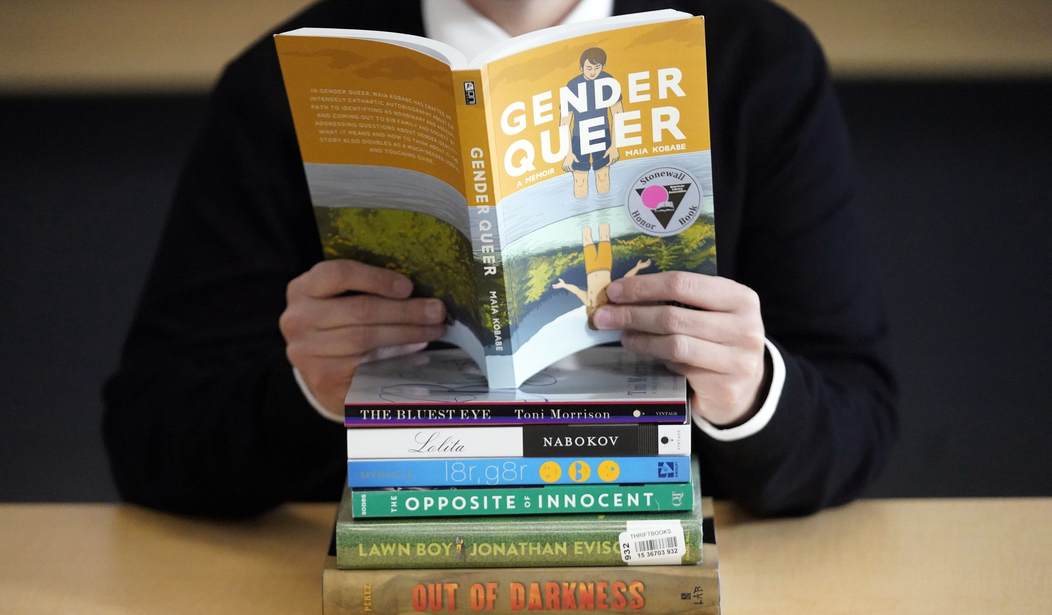

On October 5, Banned Books Week started, and, unfortunately, it continues through the 11th of October. Banned Books Week is a product of the American Library Association and popular publishers.
The supposedly banned books are not truly banned, but they are often understandably pulled from shelves and reading areas aimed at children for both public and school libraries. Those books are somehow considered very interesting and high quality by big publishers.
What was 'banned'? Strange children's books exposed
A widespread practice from established publishers is to take fictional characters, particularly those from traditional literature, mythology, and novels marketed to children, and produce developmentally inappropriate illustrations and stories about them, as it has become popular to deliberately read questionable connotations into these media.
Retellings: For example, Jo March and other characters known to her are recast as LGBTQ+ in new graphic novel "retellings" unaffiliated with Louisa May Alcott, even though the original Little Women and Little Men works only portray them as "straight" characters.
One such retelling, called Meg, Jo, Beth, and Amy, includes "coming out" content and was removed seven different times, often from school settings.
Original Stories: Additionally, a pair of fifth-grade boys are framed as homosexual lovers in the twice-removed Answers in the Pages. In this novel, one boy's mother gets him in trouble for reading a book that displays male main characters widely believed to be gay.
In "The Adventurers," the book within Answers in the Pages, the author's misleading use of the word "love" is reputed as "evidence" that the male protagonists are secretly not straight as they are enjoying what appears, on first glance, to be their natural, healthy friendship.
The author says, "At that moment Rick knew just how deeply he loved Oliver, and Oliver knew just how deeply he loved Rick."
A very common argument for keeping these types of books in children's reading areas was that these vandalized characters are like the audience and get students enjoying their stories while learning about nuanced issues, current events, and ethical problems. Those types of banned books get awards; it seemingly takes LGBT+ content to get an award for some titles.
The writers and teachers insist that those books have realistic dialogue and situations. Plus, those authorities claim, they help students dive into new perspectives as they contain many plots that intentionally mimic real-life controversies.
Reading is important
When we as readers get interested in something, we think of all the possible meanings it could carry and how the characters, themes, and stories impact us. We like characters to whom we can relate. We wonder what symbols could mean for us and our society. We may like stories that remind us of our past experiences, or we could travel to a different world altogether.
Readers know well the feeling of seeing something in literature that reminds them of their personal lives, such as the setting or a character's struggles, and this makes a quality book or story even better. Different authors each have their own inimitable style of writing that explores complex themes.
By actively paying attention to quality reading materials, the reader begins to gain new perspectives from close examination of characters' attitudes, motives, and sympathies. In other words, these materials are meant to challenge the audience.
Have you ever heard the old saying, “Junk in, junk out"? This axiom means that if readers filled their minds with garbage, trash would dominate their thoughts. On the contrary, if readers immersed their minds in reflective reading, truthfulness, goodness, and beautiful things would gracefully flutter out of their mouths, permeate their minds, and be evident in their actions.
Banned books give us the wake-up call
Sadly, there is a void for wholesome fantasy and/or adventure stories and graphic novels currently being produced by large publishers, particularly as a reader moves on from the elementary-age group.
Recommended: Rutherford County Library 'Book Ban' Investigation: Books Moved, Director Fired
While they were not wholesome, banned books had a few traits audiences enjoy (i.e. graphic novel format, cute illustrations, an adventure forming the plot, relatable characters) and were marketed to middle-grade students up to YA.
Comments on the public school system's book selections from sources such as What's Inside Children's Books?, Christian Parent Reviews, Rated Books, and Mission America are too helpful to pass over.
Perhaps we have a wake-up call for authors to produce good novels of their own, to provide some wholesomeness for our culture, our reading audiences.