Joshua Smith is the Deputy Director of the Bureau of Prisons. He is the first person in the organization's 96-year history to ever hold a leadership position after incarceration. Smith pleaded guilty in 1998 to charges of conspiring to traffic drugs across state lines with the intent to distribute. Because he provided tremendous assistance to the prosecution in its case against 21 other accused, Smith was sentenced to five years in a medium-security federal prison and fined $12,500. During that time, he was positively mentored by men serving time for white-collar crimes and was introduced to Christianity.
Upon his release in 2003, Smith built a multi-million dollar company that actively recruited, trained, and retained former inmates. On the final day of his first term, President Donald Trump pardoned Smith, citing his dedication to his faith and community, using his freedom to help others break the cycle of recidivism and poverty.
In his encore term, President Trump selected Smith as second in command of the country's network of federal prisons. When Smith sat down with the Second Chance Business Coalition in April at their annual forum, he spoke about not wanting the job when it was first offered to him; it was the enthusiasm of the Trump administration, though, that changed his mind.
"President Trump being very tough on crime — unapologetically — is also the most restorative nature of any president that we've ever had," Smith said.
President Trump's support of rejuvenating the Bureau of Prisons started with $2 billion out of the Big Beautiful Bill to overcome the agency's $4 billion debt. Smith told the forum he's investing in leadership and staff development and already beginning to see the early fruits of a shifting culture. The 36,000 people who work for the Bureau of Prisons, says Smith, are starting to believe things are getting better. With a more optimistic workforce, Smith believes prisons can pivot their focus from lock-up to rehabilitation. This message can be a difficult pill to swallow for many tough-on-crime conservatives who want dangerous people off the streets, the rule of law upheld, and justice for victims.
Smith points to the vast population of inmates who were never well to start: broken homes, insufficient guidance, lacking education, and zero positive societal contribution modeling. He says he is living proof of how prison was an invitation for him to transform his understanding of how society works and his place within it. If the mission of America's correctional facilities was to change how incarcerated people think, Smith says prison could deliver on the idea of rehabilitation.
97% of the inmates we have [in federal prison]—156,000, it's the largest in the world—will be coming back to a community and be our neighbors. If we don't focus on transforming their mindsets, preparing them for release, we can't expect a different result.
A different result from what? Re-incarceration. The Bureau of Prisons sees 44% of people return to its facilities. As a taxpayer, that sounds expensive.
97% of inmates will be returning to our communities and will be our neighbors
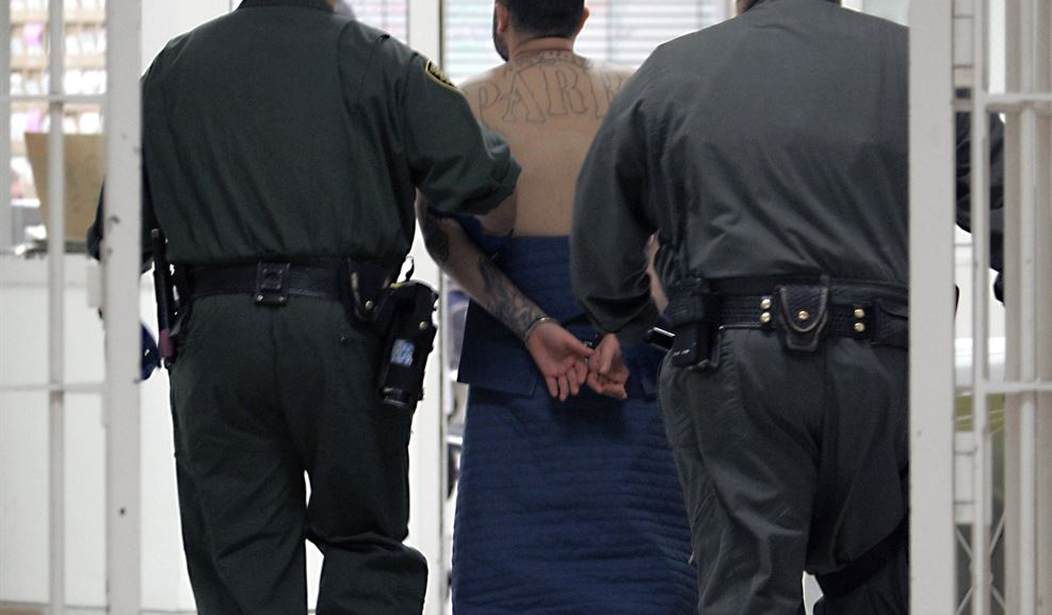
151,320 people being returned to us begs the question, "Are we locking up people who are genuine threats to society, or are we locking up the people who we're mad at?" If they go into prison and are not legitimate safety concerns, when they come out, they very well could be. Let's be honest: prison is a master class in criminal behavior. Those who are first-time offenders will be thrown right in with hardened criminals; they will seek their guidance and protection because, at first, all they want to do is survive. For the years they are locked up, those minimal threats will network with and learn from bigger, badder inmates. Without appropriate correction, released people will struggle on the outside and believe they were better off on the inside, so what do they do? Something worthy of getting locked up again. It's not judgment because it's human nature to want predictability and community.
$1,220,652 per day
For fiscal year 2022, the Bureau of Prisons stated the daily cost for an inmate in a high security facility was $164.87—there were 7,443 incarcerated each day. $1,220,652 per day. I don't know about y'all, but if my tax dollars are paying for this, I want this to be a one-time stay. Medical referral centers are the locations for inmates in need of medical care, whether short- or long-term, and cost $281.80 per inmate per day. Suddenly, those prison fights are less about getting whatever may or may not have been coming to them and more about paying for stitches, penicillin, and Tylenol. Remember what I was saying about the master class for criminals? That first-time offender will learn how to make a shiv real quick.
Fiscally, I want people to go into prison, be rehabilitated, leave prison, and not go back. For a country racking up debt by the trillions, it makes sense to cut our recurring costs when and where we can; keeping 44% of released inmates out of prison seems like a decent idea.
Breaking the stigma
Smith wants us to imagine a prison environment that includes business leaders who teach inmates how to shake someone's hand, look them in the eye, and interview for a job. He believes in opportunities for relevant education, whether it's book learning, skills training, or certifications, that will translate to life on the outside. Understandably, people don't like the idea of going into a prison; it's dark, scary, dirty, threatening, and full of folks who committed serious crimes. How does a CEO who is used to white tablecloths and private jets feel about sharing their time and space with a gang member?
Two globally successful business leaders, Jamie Dimon of JPMorgan & Chase Co. and Craig Arnold of Eaton, came together in 2021 to found the Second Chance Business Coalition. The mission was simple enough: "encourage the nation’s largest employers to give more people with backgrounds a second chance at the dignity of a good job and a better life for themselves and their families." In other words, the Second Chance Business Coalition aims to help the 80 million Americans with arrests or convictions re-enter the workforce.
Because of their reputation and sway in prominent C-suites, Dimon and Arnold have recruited brands like the NBA, Union Pacific, and Ralph Lauren to not automatically disqualify someone because they have a record. This notion of an overlooked talent pool makes many uncomfortable, but companies that have implemented these so-called "fair hiring practices" insist it makes good financial sense. According to the Fifth Third Bank Chief Economist Jeffrey Korzenik, tapping into this population makes for a stronger bottom line because, with their second chance, people with judicial records are less likely to leave, and employee attrition is expensive. The Center for Employment Opportunities reports that folks with a criminal past are no more likely to be fired and often perform better than their squeaky-clean colleagues.
Right On Crime is a national project of the Texas Public Policy Foundation and works at the state level to implement conservative reforms to the criminal justice system. If you're not familiar with their work, I hope you investigate further. President Trump and Mr. Smith are now building programs on the federal level. Is it possible to finally address and overhaul a major societal expense like the American justice system? I hope so.
What are your thoughts on our prison system? How would we identify those inmates who can be rehabilitated versus those who are too far gone?