





Words have meanings. Words convey ideas and intentions, understandings and misunderstandings. One of the left’s more insidious tactics is its relentless attempts to undermine the definitions of words (i.e. gender, class, race, genocide, freedom, violence, etc.). Leftists maintain that they’re “deconstructing” language to make for a more equitable society. What they’re actually trying to do is destroy the words’ interpretations, so that they can create whatever interpretation for the word that they themselves see fit.
It's important to maintain sanity and perseverance in times like these. But it’s also important to provide clarity, and to ensure that our intended audiences understand the meanings we give to words.
With respect to this challenge, I’ll now try to tackle a question I’ve been unable to adequately answer for a decade. And that question is this:
What is Trumpism?
There are two main problems with seeing Trumpism for what it is. First, our domestic adversaries intentionally obfuscate its meaning every chance they get, and our overseas allies sincerely don’t understand it. The American “conservatism” described in outlets such as the BBC and the Guardian sounds as bizarre to us as it does to them.
Second, even Trumpism's supporters have a hard time explaining exactly what it is. And the optics are bad when we’re called to defend a concept we can’t even define.
With this in mind, maybe it’s best to begin by ruling out what Trumpism isn’t. What Trumpism isn’t is any of the four traditional -isms, i.e. communism, socialism, fascism, or Nazism. Nobody on either side of the aisle maintains that Trumpism is a form of communism or socialism, though there are plenty on the left who howl that it is nothing more than fascism and Nazism in subtler forms.
The problem with this assessment is that the leftists use these terms to describe anyone who stands in their way in their singular goal of accumulating totalitarian power, including each other. Some of the world’s most effective mass murderers for the communist cause (Robespierre, Trotsky, Lin Biao, etc.) were executed as counterrevolutionaries in their respective races to become Most Equal Among Equals.
So we cannot consider Trumpism, or any political ideology, to be “fascist” based on the hysterical bleating of the left. In the case of Trumpism in particular, an honest assessment of both its goals and its behavior refutes the charge.
Trumpism honors free and fair elections, and it has consistently taken steps to ensure that voting is secure, transparent, and protected from non-citizens and foreign influence. Trumpism adheres to the politically-driven decrees of unaccountable district judges, no matter how absurd or unconstitutional they may be. Trumpism roots out corruption and political cronyism in federal institutions such as the FBI, the CIA, and the military that Americans have wrongly assumed were serving the best interests of the citizenry.
Trumpism prefers compromise and reconciliation rather than strong-arming and obstinacy. Trumpism shies away from issuing executive orders, even with a Congress as useless as the current one is. As of this writing, President Trump has issued a total of 480 executive orders, which is fewer than the number that Harry Truman (907), Woodrow Wilson (1803), and Franklin Roosevelt (3726) issued.
The American legal and constitutional structures remain the same as they did the day before Donald Trump rode the golden elevator, and will remain so on Jan. 20, 2029. There is no censorship, and there is no oppression. This is not the behavior of a fascist administration.
Is Trumpism a form of Nazism or an underhanded white supremacy? Based on the overwhelming evidence, the answer is a resounding no. Trump himself has never shown any animus towards any race or ethnicity. In the 2024 election, Trump won a larger percentage of minority votes than any Republican candidate in decades. This makes sense, as the economic policies that Trumpism endorsed benefit everyday Americans of every race. And any actual racism that rears its ugly head is immediately and publicly disowned, as was the case with Tucker Carlson, Candace Owens, and Megyn Kelly, now adrift and flailing in a sea of increasingly desperate podcasting.
It's fairly clear to the apolitical eye what Trumpism isn’t. But that leaves the question of what it is.
First and foremost, Trumpism emerged as a movement for a wide swath of Americans of all political persuasions, for whom the system had atrophied into a uniparty state of entrenched corruption, complete with a two-tier justice system, a self-serving Deep State, a smug unresponsiveness to the wishes of the electorate, and a complete disregard for liberties enshrined in the Constitution.
Trumpism opposes the elitists of both the left and the right. Trumpism obliterated RINO Inc. as we know it, and forced the Democrats to succumb to the most extreme elements of the fringe left. Nobody can say that either the Democrat or Republican parties of 2016 would be recognizable today. Trumpism is solely responsible for this.
Trumpism has successfully realigned the political parties along not lines of race, gender, or even class, but in terms of the sovereignty of the individual American citizen against the bloated, amorphous mess of the self-segregating globalists, the bottom-feeding race baiters, and the dime-store nihilists.
This is most evident in the arena of foreign policy. While inter-Trumpist currents debate passionately about tactics, timing, and resource allocation, the main thrust of Trumpism has been the reassertion of American dominance, and for the benefit not of insulated corporations, but for the average American. Trumpism doesn’t coddle America’s enemies. It isolates them, outmaneuvers them, arrests them, and kills them. And it refuses to allow increasingly undemocratic "allies" to take advantage of America.
Trumpism is unapologetic. It calls out failure and ineptitude, backstabbing and double dealing, hypocrisy and inanity where it sees it. Trumpism fights on its own terms, on which its enemies cannot win, yet also cannot ignore.
Trumpism is pragmatic. Its ideas stem mainly from the right, but can also incorporate elements of leftism should they actually prove effective. Trumpism is not for big government, but nor is it for no government. Trumpism is for smart government, for efficient government, and for accountable government.
Trumpist excursions into expanding big government include the creation of Space Force, funding missions to the Moon and potentially to Mars, increasing immigration enforcement, instituting tariffs, and using the power of the executive branch to dismantle DEI on college campuses. Trumpism doesn’t oppose big government on principle so much as it opposes it on past performance.
Trumpism might have supported the high-speed rail project in California had its cost not ballooned to $126 billion so far, with not a single mile of track having been laid, despite the state’s promise of a completion date of 2020. Trumpism might have supported minority hiring preferences for the truly disadvantaged based on exceptional merit, rather than the racist DEI regimes that produced some of the most utterly worthless “workers” this side of Potemkin. Trumpism doesn’t oppose government. Trumpism opposes government incompetence.
Trumpism is neither neo-conservative nor neo-isolationist. Trumpism assesses each foreign entanglement on its individual merits, weighs the costs and benefits, determines its goals, and acts based on whether the preferred outcome would benefit the United States. This absence of ideology is, in itself, the ideology driving its foreign policy. And it is this lack of ideology that gives Trumpism the flexibility necessary to deal with the world as it is, not as we wish it would be.
Trumpism confounds foreign allies and enemies alike. They don’t understand Trumpism because they don’t understand the culture that built it. They don’t chat with us over dinner, or at baseball games, or in the churches, or at the campgrounds, or in the coffee shops. They have no conception of what drives us, other than the shockingly absurd caricatures they’ve painted of us to confirm their own biases.
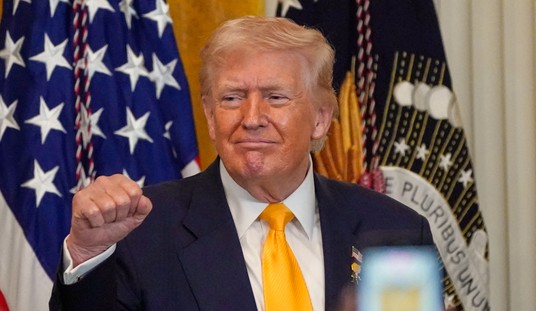
Donald Trump isn’t a politician. He is a force of nature. And while Trumpism comes dangerously close to a matter of spiritual identification for a few of its overzealous adherents, it is not a form of hero worship to concede that Donald Trump and his MAGA base of support enjoy a unique and unusual symbiotic relationship, certainly one of a kind in modern American politics, that nobody else could have created, much less maintained.
Suffice it to say that a figure such as Donald Trump could only have been produced in the United States of America. He is a purely American creature, through and through. And only the United States of America would elect a Donald Trump. To understand Trumpism is to understand America.
Trumpism defends and encourages independence. The election and re-election of Donald Trump was as much about asserting our independence from creeping foreign bureaucrats as it was about improving our everyday lives. Nearly 250 years since we first asserted our independence, the globalists continue to sneer and giggle, soothing themselves in the arrogant assumption that the American experiment will inevitably fail, at which time Les Deplorables will come crawling back to their enlightened masters. But the continued success of Trumpism is a constant reminder to them that they, supposedly the most enlightened people in history of mankind, might be wrong. It challenges their worldview, as well as their assumed place at the top of it. And they hate us for that.
Trumpism is neither a fad nor a political ideology. Trumpism is a movement. And Trumpism has been a successful movement, in that it has proven to be substantive enough to take root, but malleable enough to adapt to changing circumstances. As such, Trumpism can change form and direction (though not radically), so long as the movement is towards a main goal and within the confines of constitutional parameters.
But what is that main goal? What does it strive towards? What is the raison d’etre of Trumpism?
With that in mind, I offer my definition of Trumpism in the following six sentences:
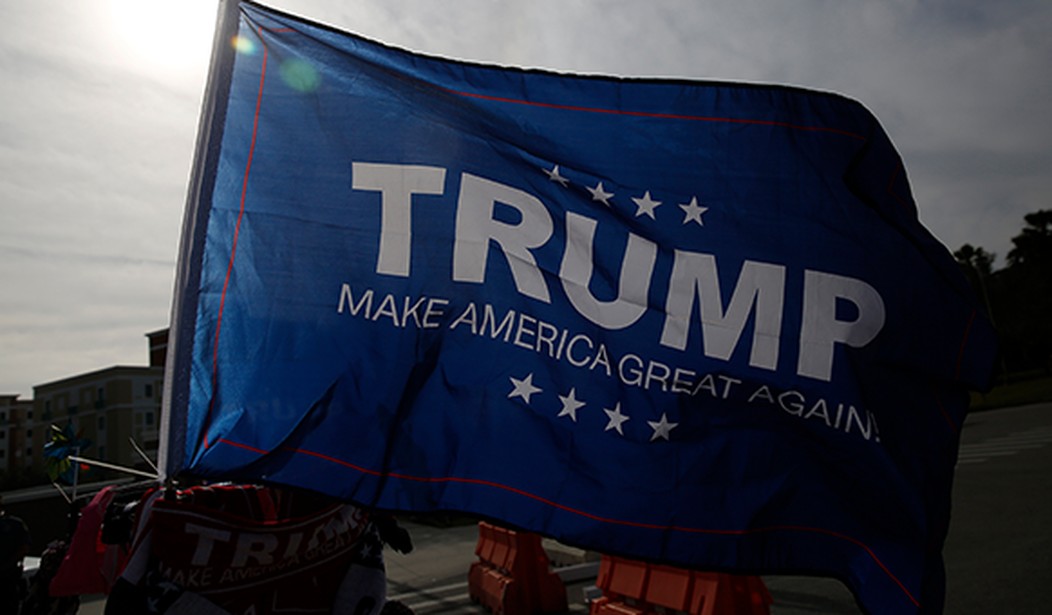
Trumpism is encapsulated in the phrase “make America great again.” This is based on the premise that there was a time within living memory when America was more successful, more capable, and more confident than it is now. The steady erosion of American greatness is due largely to corruption, lethargy, and a malevolent anti-Western strain of leftist political absolutism that has entrenched itself in the institutions of education, the judiciary, and of the corporate elites. This can be countered by celebrating, promoting, and enforcing, though tangible action, the idea of the American experiment, and of Judeo-Christian civilization in general, as the last best hope for the forces of liberal democracy against the barbarians at the gates. The movement depends crucially on determining, with unflinching eyes, who are friends are and who our friends are not, and then readjusting our alliances accordingly. The methods with which we act must uncompromisingly maintain the God-given liberties enshrined in the Constitution, must be enacted without favor or punishment for any artificially constructed group, and must never waver from its goal of prioritizing, in each and every fight, America first.
This definition undeniably has room for improvement, but it’s a start.
Help continue to tell the truth about the MAGA movement as we continue to usher in the Golden Era of America. Join VIP and use promo code FIGHT to get 60% off your membership.

Join the Conversation
VIP members get the ability to comment on articles.